

You know that feeling. It creeps in sometime after lunch. A dull ache at the base of your spine that slowly radiates upward until, by late afternoon, you're shifting in your seat every few minutes, trying desperately to find a position that doesn't hurt. According to the NHS, nearly 80% of adults in the UK will experience back pain at some point, with prolonged sitting being one of the leading culprits.
Here's the frustrating part: many of us invest in so-called "ergonomic" chairs precisely to avoid this outcome. We spend good money on something that promises comfort and support, only to discover that after a few hour;s at our desks, our backs are still complaining. So what's going on? Why do so many ergonomic chairs fail to deliver the relief they promise?
The answer lies in a fundamental mismatch between how most chairs are designed and how human beings actually move.
Why Back Pain Is So Common for Desk Workers
The average office worker spends upwards of seven hours a day seated, and according to the Office for National Statistics, nearly a third of UK desk workers go for three or more hours at a stretch without taking a single break. This prolonged stillness takes a real toll. The British Chiropractic Association reports that over 20 million people in the UK, almost one third of the population, live with a musculoskeletal condition such as back pain, accounting for up to 30% of GP consultations nationwide.
Slumped shoulders, forward head posture, a lower back that's lost its natural curve: these aren't just bad habits but the result of spending extended periods in chairs that fail to support the spine properly. When the body settles into these compromised positions, the discs in the lower spine experience increased pressure, core muscles weaken, and posture drifts from neutral alignment.
A study published in the journal Frontiers in Sports and Active Living found that prolonged sitting periods of just 4.5 hours significantly increased back muscle stiffness, highlighting the physiological toll of uninterrupted sedentary work. Over time, these cumulative strains contribute to chronic back pain, reduced mobility, and long-term spinal issues: a quiet epidemic playing out in offices across the country every day. Alternating between sitting and standing throughout the day can help mitigate these effects, and FlexiSpot's height-adjustable desks make it easy to add movement to your workday.
--altImgStart--{"link":"https://s3.springbeetle.top/prod-common-bucket/commodity/item/C7B14-20250605-momentsImg2_20260325_gtUUEqic.jpg"}--altImgEnd--
The Hidden Flaw in Most Ergonomic Chairs
Walk into any office furniture showroom, and you'll see plenty of chairs that claim to be ergonomic. They've got curves in the right places, padding in the usual spots, and the reassuring bulk that suggests serious engineering. But most share a hidden flaw. Most ergonomic chairs are designed for static bodies. But human bodies are anything but static.
Think about your typical workday. You lean forward to read. You recline to take a call. You shift to reach a notepad. Throughout the day, your spine moves constantly, adjusting to different tasks.
Now consider what most chair backrests do during these movements. They stay exactly where they are. When you lean forward, the backrest stays upright, creating a gap between your spine and the support surface. Your back muscles have to engage to hold you in position: they're working, not relaxing. When you recline, the backrest moves with you, but it's a rigid surface that doesn't accommodate your spine's natural curvature.
In other words, most chairs demand that you adapt to them. You contort yourself into whatever position the chair allows, and your body pays the price.
Why "Adjustable" Isn't the Same as "Adaptive"
To be fair, many ergonomic chairs do offer a range of adjustments. You can raise or lower the seat. You can tweak the armrests. You can often adjust the lumbar support or change the backrest angle. These features are important, and they form the foundation of any decent ergonomic setup.
Proper adjustment means your feet rest flat on the floor and your thighs are parallel to the ground. It means there's roughly the width of a fist between the edge of the seat and the backs of your knees. It means the lumbar support sits snugly against the curve of your lower back, and your armrests allow your elbows to rest at a comfortable ninety-degree angle.
These adjustments create a good starting position. But they don't solve the problem of movement. Once you've set them, they're static. And static support simply doesn't match dynamic movement. --altImgStart--{"link":"https://s3.springbeetle.top/prod-common-bucket/commodity/item/DEC7morp_20260325_2PCKVe3T.png","alt":"Ergonomic Chair with Dynamic Back System (C7 Morpher)"}--altImgEnd--
The C7 Morpher: A Chair Designed Around Movement
What if, instead of forcing you to adapt to a static backrest, your chair adapted to you? What if it moved with you throughout the day, maintaining continuous support whether you were leaning forward to work, reclining to think, or shifting position to stretch?
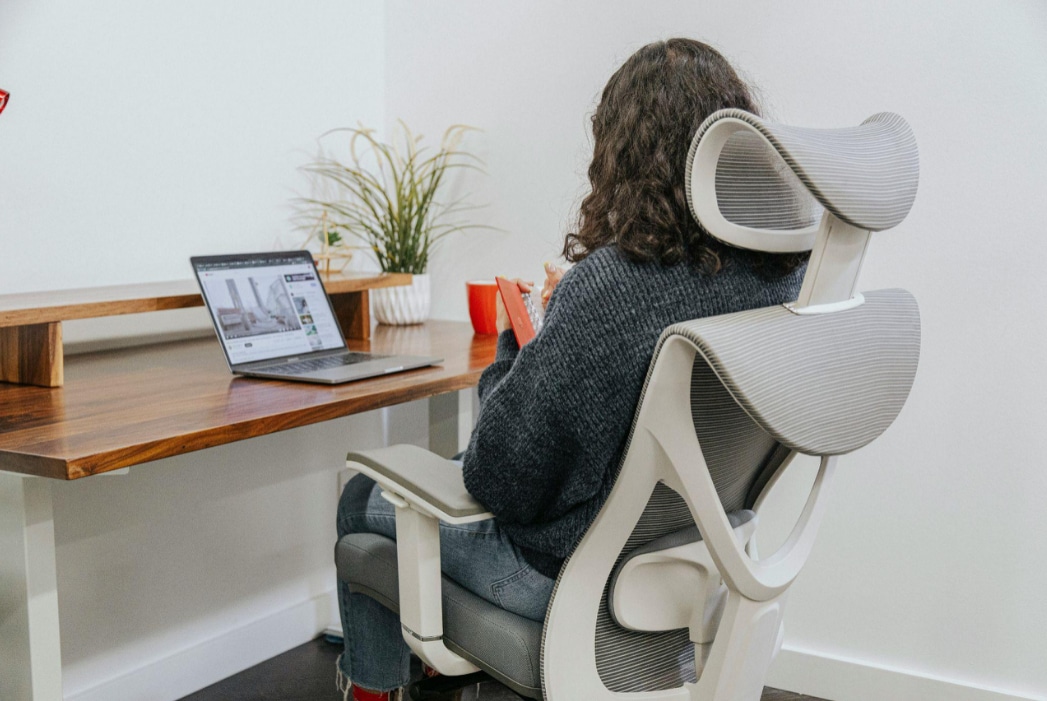
That's the thinking behind the C7 Morpher from FlexiSpot. It's not just another ergonomic chair with a list of adjustable features. It's a fundamental rethink of what an ergonomic chair should be: a support system designed from the ground up for dynamic human movement.
The name "Morpher" isn't accidental. This chair shifts, adapts, and transforms with you throughout your workday. Every point of contact between your body and the chair has been reimagined to deliver a seating experience that feels genuinely personalised. Not because you've contorted yourself to fit the chair, but because the chair has contorted itself to fit you.
95% Adjustability: The Foundation
Before diving into what makes the C7 Morpher genuinely different, it's worth acknowledging that it delivers everything you'd expect from a premium ergonomic chair.
The seat height adjusts from 45 to 54 centimetres, accommodating users from roughly 160 to 195 centimetres tall. The seat depth slides from 43.5 to 48 centimetres, ensuring full thigh support without pressure behind the knees. The headrest offers three-dimensional adjustment: 7 centimetres of height plus 70 and 80 degrees of tilt. The backrest itself adjusts to four different heights, allowing you to align its support with your spine's natural curvature.
Then there are the armrests. Most ergonomic chairs give you height adjustment and perhaps a bit of swivel. The C7 Morpher's armrests rotate a full 360 degrees and swivel 270 degrees, providing an almost limitless range of positions. Whether you're typing, mousing, or resting, you can set them exactly where your arms want them to be. This attention to comprehensive adjustability reflects FlexiSpot's broader commitment to ergonomic excellence, whether in office chairs or recliners.
The recline range extends from 110 to 143 degrees, with a synchronized tilt mechanism that moves the entire chair as one cohesive unit.
All of this adjustability creates an excellent starting point. But it's just the foundation. The real innovation lies in what happens when you start moving.
--altImgStart--{"link":"https://s3.springbeetle.top/prod-common-bucket/commodity/item/Screenshot%202026-03-25%20170248UK_20260325_AjObDsSB.png","alt":"Ergonomic Chair with Dynamic Back System (C7 Morpher)"}--altImgEnd-- --shopstart--{"id":1256007,"link":1256007,"name":"Ergonomic Chair with Dynamic Back System","shortName":"C7 Morpher","url":"https://s3.springbeetle.top/prod-common-bucket/commodity/item/1028_file_c7-morpher-footrest-indybest_20260319_iwDIuKsG.jpg","itemFootMarkType":"CUSTOMIZE","itemFootMarkInput":"Sale"}--shopend--
DynaFollow™: The Technology That Moves with You
At the heart of the C7 Morpher is DynaFollow™: a backrest design that maintains continuous spinal support through posture changes.
Most chair backrests are rigid. They have one shape, one orientation. When you lean forward, the backrest stays upright. When you shift side to side, it stays centred. Your spine moves away from the support surface, creating gaps where support should be.
DynaFollow™ solves this by allowing the backrest to follow your spine's natural movements. When you lean forward to work, the backrest responds, maintaining contact with your upper and mid-back. When you recline, it moves with you, preserving the alignment that keeps your spine comfortable. When you shift side to side, there's enough give to keep you supported without feeling constrained.
The result? You stop noticing the chair. No gradual slide into a slumped position. Just continuous, consistent support that moves with you throughout your day.
Three Innovations That Redefine Back Support
DynaFollow™ is the headline feature, but several other innovations work together to create a genuinely adaptive seating experience.
Flexlean™ 10° Forward-Tilting Backrest
One of the most overlooked challenges is what happens when you lean forward to work. Most chairs leave you unsupported in this position; the backrest is designed for upright or reclined postures, not the forward lean that characterises actual desk work.
Flexlean™ addresses this with a ten-degree forward tilt. When you lean in to work, the backrest tilts with you, providing gentle support to your upper back. This encourages a naturally upright posture during focused work, reducing neck strain and upper back fatigue.
AirLumbar™ Smart Inflatable Lumbar Support
Standard lumbar support, even when adjustable, is set once and forgotten. But your needs change throughout the day. When you're fresh, you might prefer lighter support. As fatigue sets in, you might want something firmer.
AirLumbar™ lets you adjust the firmness whenever you need to. A simple one-touch control increases or decreases pressure, moving from gentle to firm as your body demands.
Synchronized Movement Throughout
With fewer ergonomic chairs, adjustments work in isolation. You set the armrests in one position, the backrest in another, but when you recline, the relationship between these elements shifts, leaving you unsupported.
The C7 Morpher solves this with synchronized movement. When the backrest reclines, the armrests move with it, maintaining their relationship to your arms and shoulders. The entire chair moves as a single, cohesive support system.
--altImgStart--{"link":"https://s3.springbeetle.top/prod-common-bucket/commodity/item/Screenshot%202026-03-25%20172401_20260325_KWNbZLmT.png","alt":"Ergonomic Chair with Dynamic Back System (C7 Morpher)"}--altImgEnd--
The Real-World Difference
All of this technology sounds impressive on paper, but what does it actually feel like to sit in a chair that adapts to you?
The most common feedback from C7 Morpher users is that they no longer notice the chair. There's no constant need to readjust, no gradual slide into poor posture, no mid-afternoon moment where you suddenly realise your back has been unsupported for the last hour. Instead, there's simply the absence of discomfort: the quiet confidence that your chair supports you, whether you're leaning forward to work, reclining to think, or shifting position.
One user put it this way: "The entire back and even the neck are really well supported." Another noted that the backrest adapts "very flexibly to my sitting position," allowing them to work longer without fatigue. When a chair works properly, you barely notice it's there.
Conclusion: Invest in a Chair That Adapts to You
The core problem with most ergonomic chairs is simple: they're designed for bodies that don't move. But real bodies lean, shift, recline, and stretch. We're dynamic creatures, and we need support systems that are dynamic too.
The C7 Morpher represents a different approach. Instead of demanding that you adapt to a static backrest, it adapts to you, maintaining continuous support through every movement, every posture, every moment of your workday.
At £599.99 (down from £799.99), it's an investment in daily comfort, improved productivity, and long-term spinal health. When you spend hours every day seated, the chair you choose matters more than almost any other piece of equipment you own.
Stop forcing your body to adapt to a static chair. Choose something designed to move with you.


_20260602_cc9a7609.png)


