

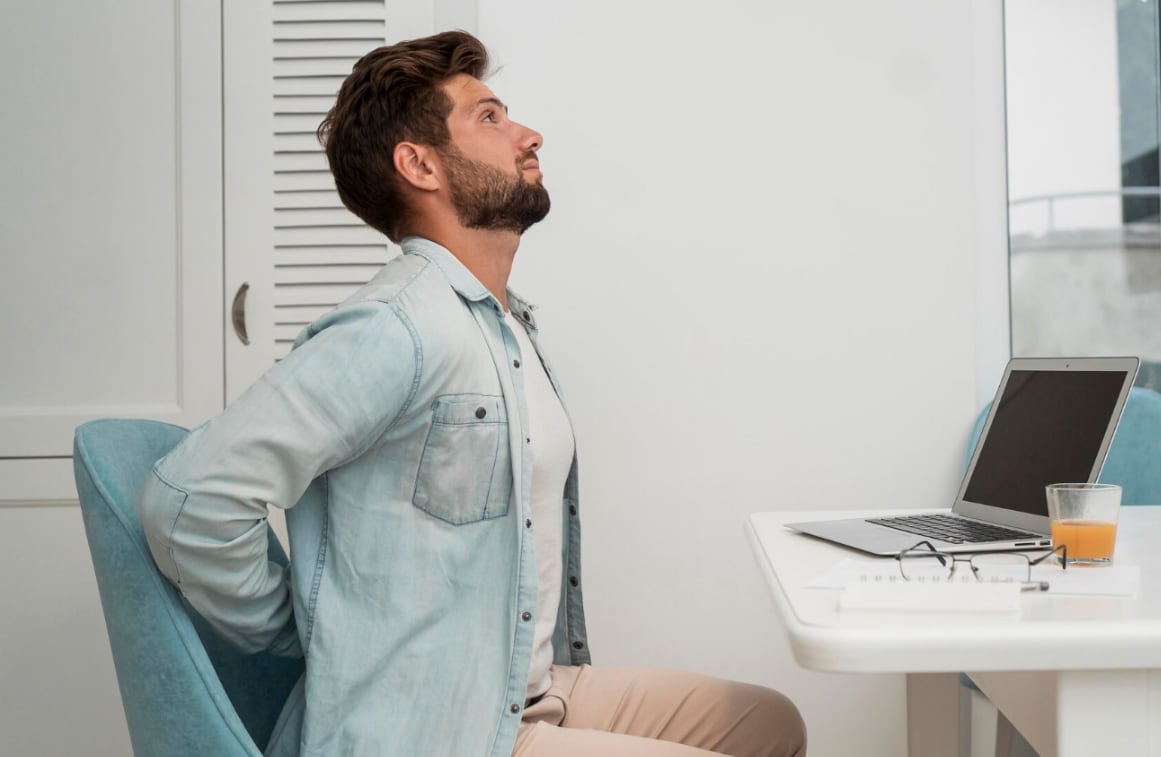
You may not notice it happening, but it is one of the most common posture habits today.
Shrimp posture describes a slouched sitting position where the back rounds forward, the shoulders drop inward, and the head leans toward the screen. It often develops during long hours at a desk, especially when focus takes priority over posture.
At first, it feels harmless. Over time, however, it can lead to discomfort in the neck, shoulders, and lower back. What makes it particularly difficult to manage is that it often becomes a habit without conscious awareness. Understanding how this posture forms and how to correct it can make a significant difference to both comfort and long-term health.
What Is Shrimp Posture?
Shrimp posture is a forward-curved sitting position that places uneven strain on the body.
Key characteristics
- Rounded upper back
- Forward head position
- Drooping shoulders
- Collapsed core posture
This position reduces natural spinal alignment and increases pressure on muscles that are not designed to hold weight for extended periods. Over time, this imbalance forces certain muscles to work harder than they should, while others weaken due to lack of use.
Why Shrimp Posture Happens
1. Prolonged sitting
Sitting for long periods without movement is one of the main causes. As the body becomes tired, it naturally shifts into a more relaxed but less supportive position. This often happens gradually, making it harder to notice.
2. Poor workspace setup
If your desk or screen is not positioned correctly, you may lean forward without realising it. This gradually reinforces poor posture habits, especially when repeated daily.
3. Lack of awareness
Many people simply do not notice when their posture changes. Once it becomes habitual, it can feel normal even when it is not supportive. This makes correction more difficult without intentional effort.

The Effects on Your Body
● Neck and shoulder strain
A forward head position places extra weight on the neck. According to the NHS, poor posture is a common cause of neck and shoulder pain.
● Lower back discomfort
A rounded back reduces support for the spine, leading to tension in the lower back over time. This discomfort often builds gradually rather than appearing suddenly.
● Reduced breathing efficiency
Slouched posture can compress the chest area, making it harder to take full, deep breaths. Over time, this can contribute to fatigue and reduced focus.
● Long-term posture issues
If left uncorrected, shrimp posture can contribute to long-term alignment problems and persistent discomfort. In some cases, it can affect mobility and overall physical performance.
How to Correct Shrimp Posture
Adjust your sitting position.
Start with the basics:
- Sit with your back fully supported
- Keep your feet flat on the floor
- Align your head with your spine
These small adjustments create a more stable and balanced position and reduce unnecessary strain.
Raise your screen to eye level
Your screen should be at a height that allows you to look straight ahead rather than down. This helps reduce forward head movement and encourages better alignment throughout the day.
Take regular breaks
Movement is essential for maintaining posture.
The Health and Safety Executive recommends taking regular breaks from screen-based work to reduce strain and improve comfort.
Strengthen posture awareness
Simply checking in with your posture throughout the day can help prevent habits from forming. Over time, this awareness becomes more natural and requires less effort.
The Role of Ergonomic Furniture
While habits are important, your environment also plays a key role.
● Why standard chairs fall short
Many chairs do not provide the support needed to maintain proper alignment. This makes it easier to slip into a slouched position, especially during longer work sessions.
● How ergonomic design helps
An ergonomic chair is designed to support the natural curve of your spine and adapt to your movements.
A chair such as the C7 Morpher ergonomic chair offers high adjustability, allowing you to customise support from head to toe.
With adjustable features that follow your body’s natural shifts, it helps maintain an S-shaped spinal curve, reducing the tendency to slump forward. This kind of support makes it easier to maintain good posture without constant effort, especially during long periods of focused work.
--altImgStart--{"link":"https://s3.springbeetle.top/prod-common-bucket/commodity/item/Screenshot%202026-05-07%20172010_20260508_BLTSJ6r1.png","alt":"Ergonomic Chair with Dynamic Back System (C7 Morpher)"}--altImgEnd-- --shopstart--{"id":1256007,"link":1256007,"name":"Ergonomic Chair with Dynamic Back System","shortName":"C7 Morpher","url":"https://s3.springbeetle.top/prod-common-bucket/commodity/item/1028_file_c7-morpher-footrest-indybest_20260319_iwDIuKsG.jpg","itemFootMarkType":"NONE","itemFootMarkInput":"Sale"}--shopend--
Practical Daily Habits to Improve Posture
● Reset your posture regularly
Take a moment every hour to sit upright and realign your body.
● Keep your workspace organised
A clutter-free desk makes it easier to position your screen and equipment correctly.
● Avoid leaning forward
If you notice yourself leaning toward the screen, adjust your setup instead of your body.
● Combine sitting with movement
Alternating between sitting and standing helps reduce the risk of staying in one position for too long and supports overall comfort.
Common Mistakes to Avoid
Ignoring early discomfort
Small signs of tension often indicate posture issues that should be addressed early.
Relying only on willpower
Without proper support, maintaining posture can become tiring and inconsistent.
Sitting still for too long
Even good posture can become uncomfortable if maintained for extended periods without movement.
FAQ: Shrimp Posture
1. What causes shrimp posture?
It is usually caused by prolonged sitting, poor workspace setup, and lack of posture awareness.
2. Can shrimp posture lead to long-term pain?
Yes. If not corrected, it can contribute to chronic neck, back, and shoulder discomfort.
3. How can I fix my posture quickly?
Adjust your seating position, raise your screen, and take regular movement breaks.
4. Does an ergonomic chair help?
Yes. A supportive chair makes it easier to maintain proper alignment and reduces strain.
Conclusion
Shrimp posture is a common habit, but it is also one that can be corrected.
By becoming more aware of how you sit, making simple adjustments to your workspace, and using supportive furniture, you can reduce strain and improve comfort. These changes do not need to be complicated. Small, consistent improvements can make a noticeable difference over time.
Maintaining good posture is not about perfection. It is about creating a setup that supports your body and helps you stay comfortable, focused, and productive throughout the day.


_20260602_cc9a7609.png)


