

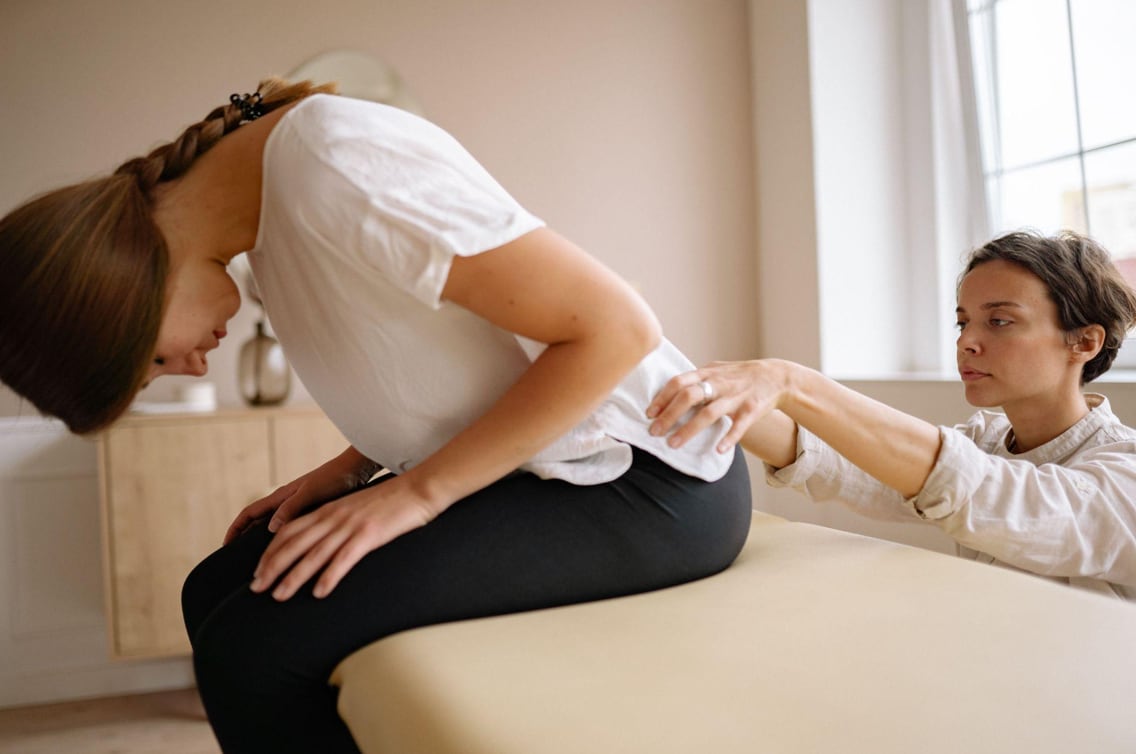
Back pain is one of the most common physical complaints during pregnancy. It may begin in the early stages, become more noticeable as the pregnancy progresses, or fluctuate depending on activity, posture and fatigue.
Although some discomfort can be expected, it should not simply be ignored. Gentle movement, supportive sitting positions and changes to everyday habits can often make symptoms more manageable. Persistent or severe pain should always be discussed with a midwife, GP or obstetric physiotherapist.
The most effective approach is usually a combination of movement, rest and practical support rather than relying on one solution alone.
Why Back Pain Happens During Pregnancy
Several physical changes can place additional strain on the lower back and pelvis.
The body’s centre of gravity changes
As the uterus grows, body weight shifts forward. This can alter posture and encourage the lower back to curve more than usual.
The abdominal muscles also stretch as pregnancy progresses. Because these muscles normally help support the spine, the back may have to work harder during standing, walking, and lifting.
The American College of Obstetricians and Gynecologists explains that a growing uterus, additional weight and weakened abdominal muscles can all contribute to pregnancy back pain.
Ligaments become more flexible
Pregnancy hormones soften and loosen ligaments to prepare the pelvis for childbirth. Although this is a normal process, it can make the joints around the lower back and pelvis less stable.
The NHS notes that softer, more flexible ligaments can place strain on the joints of the lower back and pelvis.
Everyday movements place extra pressure on the body
Long periods of standing, unsuitable seating and repeated lifting and twisting movements can make discomfort worse. Back pain may also become more noticeable later in the day as muscles become tired.
Improve Posture Without Becoming Rigid
Good posture does not mean holding the body perfectly still. It means finding supported positions and changing them before discomfort builds.
Avoid over-arching the lower back
When standing, try to keep the weight distributed evenly across both feet rather than pushing the stomach forward and leaning backwards.
Wear comfortable, supportive footwear and avoid standing in one position for extended periods. If standing for a while is unavoidable, placing one foot on a low step may reduce pressure on the lower back.
Sit with the lower back supported
Choose a chair that allows the feet to rest flat on the floor and supports the natural curve of the lower back. A small cushion or rolled towel placed behind the lumbar area can provide extra support.
Avoid perching on the edge of a chair or sinking into very soft seating without back support. Change position regularly rather than trying to maintain one posture for hours.
Lift with care
Bend the knees and keep the back relatively straight when picking something up. Hold objects close to the body and avoid twisting while lifting.
The NHS advises pregnant people to avoid lifting heavy objects and to move their feet when turning rather than twisting the spine.
--altImgStart--{"link":"https://s3.springbeetle.eu/prod-eu-s3/commodity/item/pexels-pavel-danilyuk-7055698_20260701_bbgp4bGA.jpg"}--altImgEnd--
Use Safe Movement and Gentle Stretching
Complete rest is not usually the best response to uncomplicated pregnancy-related back pain. Gentle activity can help maintain strength and reduce stiffness.
Keep moving within comfortable limits
Walking, swimming, and pregnancy-appropriate exercise can support circulation, mobility and muscular strength.
The NHS recommends remaining active during pregnancy for as long as it feels comfortable. However, exercise should not cause significant pain.
Anyone with pregnancy complications, new symptoms or uncertainty about suitable activity should speak to a midwife or doctor before beginning a new routine.
Try gentle strengthening exercises
Exercises that support the abdominal, pelvic and back muscles may help reduce strain. Pelvic tilts and controlled movements on the hands and knees are often recommended, but technique matters.
Move slowly, breathe normally and stop if an exercise causes pain, dizziness or discomfort. An obstetric physiotherapist can provide personalised guidance when general exercises are not enough.
Avoid pushing through pain
A stretch should feel gentle rather than sharp or intense. Pregnancy is not the time to force greater flexibility, particularly because the ligaments are already more relaxed.
Short, regular sessions are usually more useful than occasional strenuous workouts.
Find More Comfortable Resting Positions
Rest remains important, especially later in pregnancy, but positioning can determine whether it actually relieves discomfort.
Support the body in bed
Side sleeping with a pillow between the knees can help keep the hips and pelvis more comfortably aligned. A pillow beneath the bump or behind the back may provide additional support.
Getting out of bed can also strain the back. Roll onto your side first, lower the legs towards the floor and use the arms to push into a sitting position.
Use warmth carefully
A warm bath may relax tense muscles and provide temporary relief. A warm, rather than very hot, heat pack can also be used for short periods, provided a healthcare professional has not advised against it.
Heat should feel comfortable and should never be applied at a temperature that could burn the skin.
Plan short periods of supported rest
Resting does not need to mean lying down for hours. A comfortable chair with good lumbar, arm and head support can allow the body to relax while making it easier to stand again.
Choose Supportive Seating for Rest and Feeding
A supportive chair can be useful during pregnancy and remain practical after the baby arrives.
Look for lumbar and arm support
The backrest should support the lower and upper back without forcing the shoulders forwards. Armrests can reduce strain when sitting down, standing up or holding a baby.
A reclining function may also help users vary their position, although the chair should still feel stable and easy to operate.
Consider a nursery recliner chair
The FlexiSpot Belli nursery recliner chair is designed for resting, feeding and relaxation. Its swivel, rocking and reclining functions provide different seating options as comfort needs change.
A nursery recliner chair should not be presented as a treatment for back pain. However, supportive seating may make rest and feeding sessions more comfortable by helping users avoid unsupported or awkward positions. --altImgStart--{"link":"https://s3.springbeetle.top/prod-common-bucket/commodity/item/section5-img_20260427_wDnV22eJ.png","alt":"Swivel and Rocking Recliner Nursery Chair for Breastfeeding (Belli)"}--altImgEnd--
Place any frequently used items within easy reach so that you do not repeatedly twist or lean while seated.
Know When to Seek Medical Help
Most pregnancy-related back pain is musculoskeletal, but certain symptoms require prompt assessment.
Contact your midwife or GP
Seek advice if the pain is severe, persists despite self-care or interferes significantly with walking, sleeping or everyday activities.
Contact a healthcare professional urgently if back pain is accompanied by:
- Vaginal bleeding
- Fever
- Pain or burning when urinating
- Pain beneath the ribs or in the side
- Regular tightening or possible signs of early labour
- Increasing pelvic pain or difficulty moving
Loss of sensation in the legs, buttocks or genital area requires emergency medical attention.
The Royal College of Obstetricians and Gynaecologists provides additional guidance on pelvic girdle pain during pregnancy.
Final Thoughts
Pregnancy back pain can result from changing posture, additional body weight, weakened abdominal support and more flexible ligaments. Relief often comes from combining gentle activity with better lifting habits, supportive rest and frequent changes of position.
Avoid remaining completely still for long periods, but do not push through painful movement. Use pillows, lumbar support and comfortable seating to reduce unnecessary strain throughout the day.
Most importantly, speak to a midwife, GP or physiotherapist when pain is persistent, severe or accompanied by other symptoms. Pregnancy discomfort may be common, but professional support is available and significant pain should never be dismissed.


_20260602_cc9a7609.png)


