


Flowers have long been associated with Valentine’s Day, but how they are displayed can be just as meaningful as the bouquet itself. A thoughtfully arranged bunch of flowers has the power to transform a room, set a mood, and communicate care without a single word. Rather than defaulting to a quick vase on the kitchen counter, taking time to consider presentation can turn a familiar gesture into something more personal.
Whether you are marking the day quietly at home or preparing a setting for a shared evening, the way flowers are displayed can reflect intention, attention, and warmth.
Choosing the Right Setting for Your Flowers
Let the Space Guide the Arrangement
Before placing flowers, consider the room they will inhabit. A dining table invites a different approach than a bedside table or windowsill. Central spaces benefit from low, wide arrangements that encourage conversation, while smaller areas suit simpler, vertical displays.
Avoid placing flowers where heat sources or direct sunlight may shorten their lifespan. The Royal Horticultural Society advises keeping cut flowers away from radiators and bright windows to help them last longer.
Balance, Not Symmetry
Perfect symmetry can feel formal. For Valentine’s Day, a slightly relaxed arrangement often feels more intimate. Allow stems to sit at different heights and angles, creating a natural flow rather than a rigid structure.
Vase Choices That Change the Mood
Classic Glass for Timeless Appeal
Clear glass vases remain popular for a reason. They suit almost any flower type and allow stems to become part of the display. This works particularly well for roses, tulips, and lilies, where the structure of the plant adds to the visual interest.
Ceramic and Stoneware for Warmth
If you prefer a softer, more contemporary look, ceramic or stoneware vases introduce texture and warmth. Neutral tones such as off-white, sand, or soft grey complement Valentine’s flowers without overpowering them.
Unexpected Containers
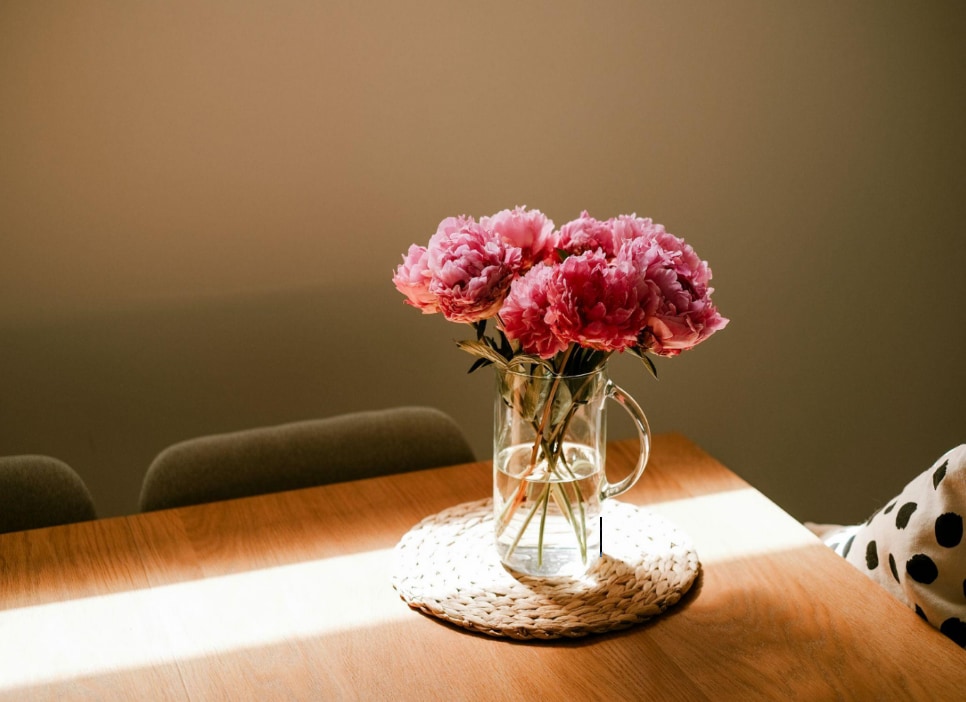
Flowers do not always need a traditional vase. A small jug, teapot, or even a wide tumbler can work beautifully for shorter stems or hand-tied posies. These informal choices often feel more personal and less staged.
Styling Flowers with Intention
Grouping for Impact
Rather than relying on a single arrangement, consider grouping several smaller vases together. This approach works well on sideboards or shelves and allows you to spread flowers throughout a space without overwhelming it.
Use odd numbers, three or five small vases, to create a balanced yet organic composition.
Layering with Candles and Textiles
Flowers rarely exist in isolation. Pairing them with soft candlelight or linen table runners can elevate the display without much effort. Keep colours restrained to avoid visual clutter, especially if the flowers themselves are bold.
The BBC’s interior design guidance often highlights restraint and layering as key elements in creating calm, inviting spaces.
Keeping Flowers Fresh Throughout the Day
Simple Care Makes a Difference
Trim stems at an angle before placing them in water and remove any leaves that sit below the waterline. These small steps help prevent bacterial growth and keep flowers looking fresh.
Changing the water every two days can significantly extend the life of an arrangement. According to guidance from the Royal Botanic Gardens, Kew, clean water and proper stem care are among the most effective ways to preserve cut flowers.
Refreshing the Display
If flowers begin to droop, do not rush to discard them. Shortening stems and moving them to a smaller container can give them a second life, particularly for evening settings.
Flower Displays Beyond the Bouquet
Single-Stem Statements
A single flower placed thoughtfully can be just as striking as a full bouquet. One rose in a narrow vase on a bedside table or desk can feel deliberate and understated, aligning well with modern interior styles.
Dried or Pressed Flowers
For something longer-lasting, dried flowers or pressed blooms offer a quieter, more reflective alternative. These work well in minimal interiors and can serve as a lasting reminder beyond Valentine’s Day itself.
Making the Gesture Feel Personal
Flowers are most meaningful when they reflect the recipient rather than tradition alone. Favourite colours, preferred scents, or even seasonal blooms can add a layer of thoughtfulness that goes beyond convention.
The presentation should support this intention. A carefully chosen container, a considered placement, and attention to detail all signal care, often more clearly than size or extravagance.
Final Thoughts
Displaying flowers on Valentine’s Day is less about rules and more about awareness. By considering space, container, and context, flowers can become part of the atmosphere rather than a standalone object.
With simple choices and a thoughtful approach, even the most familiar bouquet can feel new again, quietly enhancing the moment and the space it inhabits.
Flowers also have a subtle ability to shape how a space feels emotionally. Their presence can soften hard edges, slow the pace of a room, and create moments of pause in otherwise busy surroundings. On Valentine’s Day, this effect feels especially relevant. A thoughtfully placed arrangement can turn an ordinary evening into something more considered, without requiring elaborate planning. By allowing flowers to interact naturally with light, texture, and space, they become part of the environment rather than a temporary decoration, contributing quietly to comfort, atmosphere, and connection.


_20260602_cc9a7609.png)


