


Humidity is one of those things you rarely think about until it becomes a problem.
Air that feels too dry can leave your skin irritated and your throat scratchy. Air that feels too heavy can make rooms uncomfortable and even lead to damp or mould. The balance sits somewhere in between, and getting it right can have a noticeable effect on how your home feels day to day.
The good news is that managing indoor humidity does not require complicated equipment or constant adjustments. With a basic understanding of what to look for and a few simple habits, you can create a more comfortable and healthier living environment.
Why Humidity Matters in Your Home
Humidity affects more than just comfort.
It influences your health, the condition of your furniture, and even the air you breathe. According to the UK Health Security Agency, indoor environments that are too damp can encourage mould growth, which may affect respiratory health.
At the same time, air that is too dry can irritate the skin, eyes, and airways. It can also cause materials such as wood to shrink or crack over time.
Maintaining the right humidity level helps:
- Improve breathing comfort
- Protect skin and eyes
- Prevent mould and damp
- Preserve furniture and flooring
What Is the Ideal Indoor Humidity Level?
Most experts recommend keeping indoor humidity between 30% and 60%.
This range provides a balance between comfort and safety. The Environmental Protection Agency suggests that maintaining humidity within this range helps prevent mould growth while supporting indoor air quality.
What happens if the humidity is too low?
When humidity drops below 30%, you may notice:
- Dry skin or lips
- Irritated eyes
- Static electricity
- Increased sensitivity in your throat or nose
What happens if the humidity is too high?
When humidity rises above 60%, it can lead to:
- Damp or musty smells
- Condensation on windows
- Increased risk of mould
- A heavier, uncomfortable atmosphere

Practical Ways to Control Humidity
Use a humidifier or dehumidifier when needed
If your home is consistently too dry, a humidifier can help restore moisture. If it is too humid, a dehumidifier can reduce excess moisture.
These devices are especially useful during seasonal changes when indoor air conditions fluctuate.
Improve ventilation
Good airflow is one of the simplest ways to control humidity.
Opening windows, even briefly, allows fresh air to circulate and helps regulate moisture levels. Extractor fans in kitchens and bathrooms are also important, as these areas tend to generate the most humidity.
Monitor humidity levels
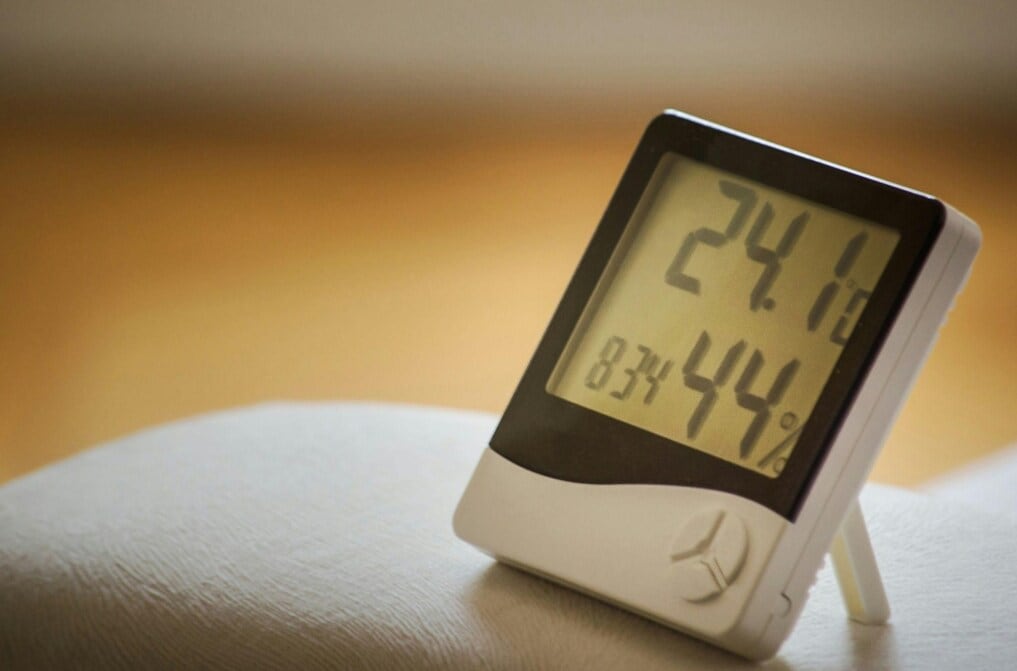
A small hygrometer can help you track indoor humidity accurately.
Without measuring it, it is easy to rely on guesswork. Monitoring levels allows you to adjust conditions before problems develop.
Adjust daily habits
Everyday activities affect humidity more than you might expect.
For example:
- Cooking and boiling water increase moisture
- Drying clothes indoors adds humidity
- Heating systems can reduce moisture levels
Being aware of these factors helps you maintain balance more easily.
Natural Ways to Balance Humidity
To increase humidity
If your home feels dry:
- Place bowls of water near radiators
- Add houseplants, which release moisture naturally
- Let laundry air dry indoors occasionally
To reduce humidity
If your home feels damp:
- Open windows regularly
- Use extractor fans during cooking and showers
- Avoid drying clothes in enclosed spaces

How Humidity Affects Sleep and Comfort
Humidity levels play a role in how well you sleep.
Air that is too dry can irritate your throat and nasal passages, while air that is too humid can feel heavy and uncomfortable. The Sleep Foundation notes that a balanced indoor environment supports better sleep quality.
A moderate humidity level helps maintain comfort throughout the night and reduces disturbances caused by dryness or congestion.
Practical Guide: Keeping Humidity Balanced Year-Round
❖ In winter
Heating systems often dry out indoor air. Consider using a humidifier or adding natural moisture sources.
❖ In summer
Warmer air can hold more moisture, so ventilation becomes more important. Dehumidifiers may also be useful in certain conditions.
❖ Throughout the year
Regularly check humidity levels and adjust as needed. Small changes are usually enough to maintain balance.

FAQ: Indoor Humidity
● What is the healthiest humidity level for a home?
Between 30% and 60% is generally considered ideal for comfort and health.
● What is the best humidity level for eczema?
Many people with eczema find that moderate humidity, around 40% to 50%, helps reduce skin dryness.
● Is 25% humidity too low in a house?
Yes. This level is considered dry and can lead to skin irritation and discomfort.
● How to naturally humidify a room?
You can add houseplants, place water near heat sources, or allow laundry to air dry indoors.
● Is 70% humidity in a house high?
Yes. This level increases the risk of damp and mould and should be reduced.
● What are the signs of too little humidity?
Dry skin, irritated eyes, static electricity, and discomfort in the throat or nose are common signs.
● Is it okay to sleep with a humidifier every night?
Yes, as long as it is used properly and kept clean. It can help maintain comfortable humidity levels.
● What humidity is best for sleeping?
A range of 40% to 60% is generally comfortable for sleep.
● What humidity is too low for skin?
Below 30% can cause noticeable dryness and irritation.
● Is 50% humidity too low?
No. It sits comfortably within the recommended range.
● Does opening a window reduce humidity?
Yes, especially if the outside air is less humid. It helps improve airflow and balance moisture levels.
● What is dangerously dry indoor humidity?
Levels below 20% are considered very dry and can cause significant discomfort and irritation.
Conclusion
Humidity plays a quiet but important role in how your home feels.
When it is balanced, you hardly notice it. When it is not, it affects your comfort, your health, and even your surroundings. The key is not perfection, but awareness.
By monitoring your indoor environment and making small adjustments, you can maintain a space that feels comfortable throughout the year. It is a simple change, but one that has a lasting impact on daily life.


_20260602_cc9a7609.png)


