

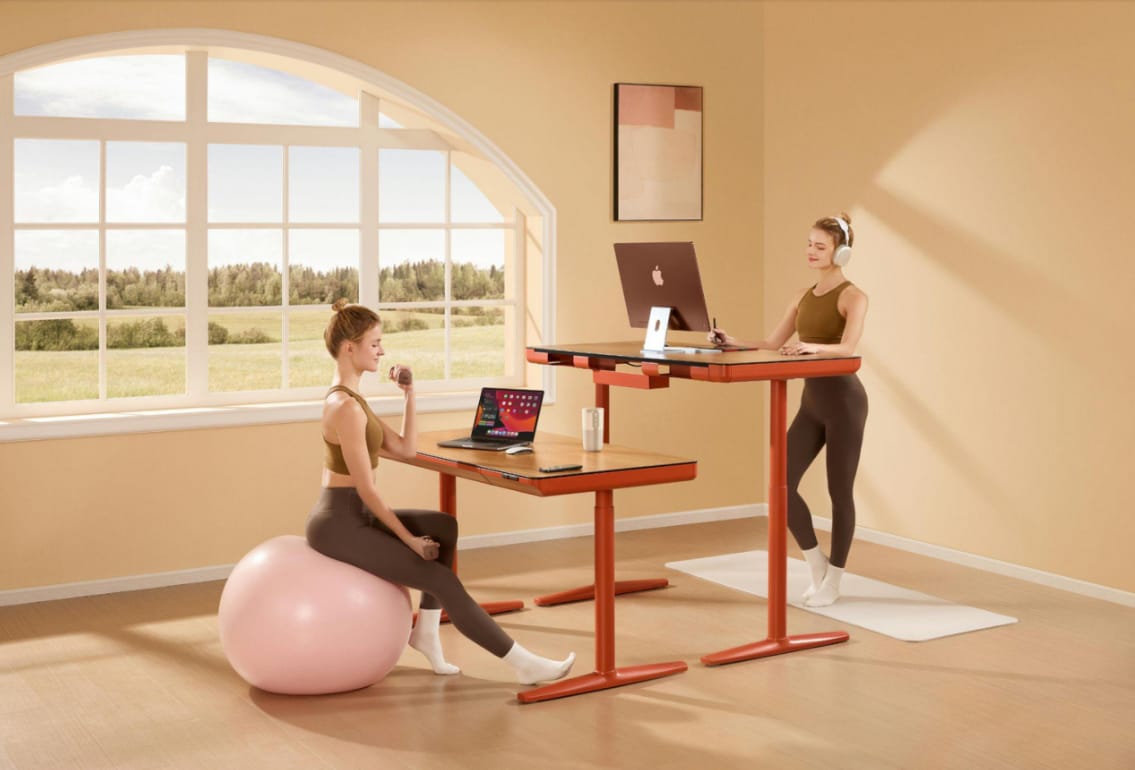
Sitting for long periods has become part of daily work for many people.
Hours pass quickly when you are focused, but your body often pays the price. Stiff shoulders, tight hips, and low energy are common by the end of the day. What makes this more frustrating is that it builds gradually, so it is easy to ignore until discomfort becomes noticeable.
The solution does not require a full workout or a trip to the gym. Short, regular movement during the day can make a significant difference. Even a few minutes of stretching or light activity can improve how your body feels and how well you stay focused.
Why Movement Matters During the Workday
When you sit for extended periods, your muscles remain inactive, and circulation slows down.
This can lead to stiffness, reduced flexibility, and lower energy levels. According to the British Heart Foundation, prolonged sitting is linked to increased health risks, even for people who exercise regularly outside of work.
Regular movement helps:
- Improve blood flow
- Reduce muscle tension
- Maintain joint flexibility
- Increase alertness
These benefits are not just physical. They also support concentration and productivity throughout the day.

How Short Exercise Breaks Help
Better circulation
Moving your body encourages blood flow, which helps deliver oxygen and nutrients more efficiently. This can reduce fatigue and improve mental clarity.
Reduced stiffness
Muscles tighten when held in one position for too long. Stretching releases this tension and helps restore natural movement.
Increased energy
Short bursts of activity can reset your energy levels, making it easier to stay focused without relying on caffeine.
Research from Harvard Health Publishing shows that even light activity during the day can improve both physical and mental well-being.
Quick Desk Exercises You Can Do Anywhere
These exercises require little to no space and can be done in most office environments.
1. Neck stretch
Gently tilt your head toward one shoulder and hold for 10 to 15 seconds. Repeat on both sides. This helps relieve tension from looking at screens for long periods.
2. Shoulder rolls
Lift your shoulders slightly, then roll them back in a slow circular motion. Repeat several times, then reverse the direction.
3. Seated spinal stretch
Sit upright and place your hands on your thighs. Slowly twist your upper body to one side, hold briefly, then return to the centre. Repeat on the other side.
4. Wrist and forearm stretch
Extend one arm forward with your palm facing down. Use your other hand to gently pull your fingers downward, then switch sides. This is especially useful if you type frequently.
5. Leg extensions
While seated, extend one leg straight out and hold for a few seconds. Lower it slowly and repeat with the other leg.
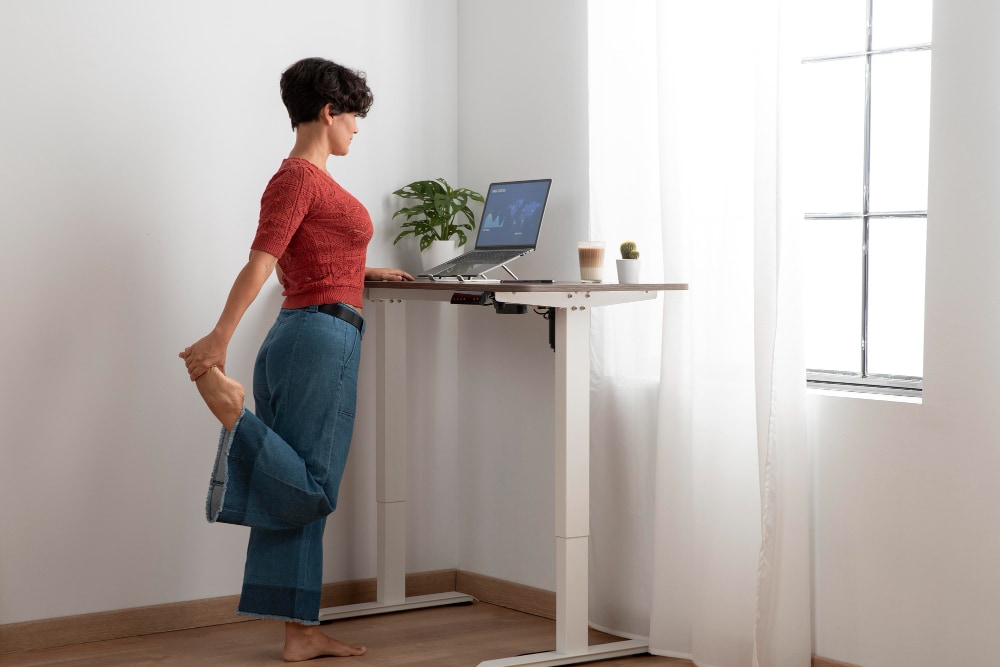
6. Standing stretch
Stand up, raise your arms overhead, and stretch your entire body upward. Hold for a few seconds before relaxing.
Making Movement Part of Your Routine
➔ Set regular reminders
It is easy to forget to move when you are focused. Setting a reminder every 30 to 60 minutes can help build consistency.
➔ Combine movement with tasks
Take calls standing up or stretch briefly between tasks. These small changes add up over time.
➔ Use your workspace to support movement
A flexible setup makes it easier to stay active. For example, using a FlexiSpot Standing Desk allows you to alternate between sitting and standing throughout the day without disrupting your workflow.
Changing positions regularly helps reduce strain and keeps your body engaged.
Practical Guide: A Simple Daily Approach
If you are not sure where to start, keep it manageable.
- Every 30–60 minutes: stand or stretch briefly
- Twice a day: perform a short sequence of desk exercises
- Throughout the day: adjust posture and avoid staying still
This approach is simple enough to maintain while still making a noticeable difference.
Common Mistakes to Avoid
Waiting until you feel discomfort
Movement works best as prevention, not just a response to pain.
Overcomplicating exercises
You do not need a full routine. Simple, repeatable movements are more effective.
Ignoring posture
Exercise helps, but your daily sitting position still matters. Make sure your chair and desk support proper alignment.
FAQ: Desk Exercises at Work
How often should I do desk exercises?
Every 30 to 60 minutes is ideal. Even short breaks can reduce stiffness and improve circulation.
Can desk exercises replace regular workouts?
No, but they complement them. They help reduce the negative effects of prolonged sitting during the day.
Do I need equipment for desk exercises?
No. Most effective movements use only your body weight and require very little space.
Will desk exercises improve productivity?
Yes. Regular movement can improve focus, reduce fatigue, and help maintain consistent energy levels.
Conclusion
Staying active at work does not require major changes.
Small, consistent movements throughout the day can have a lasting impact on how you feel. By building simple exercises into your routine and creating a workspace that supports movement, you can reduce stiffness, improve energy, and work more comfortably.
It is not about doing more. It is about doing enough, often enough, to support your body throughout the day.


_20260602_cc9a7609.png)


