

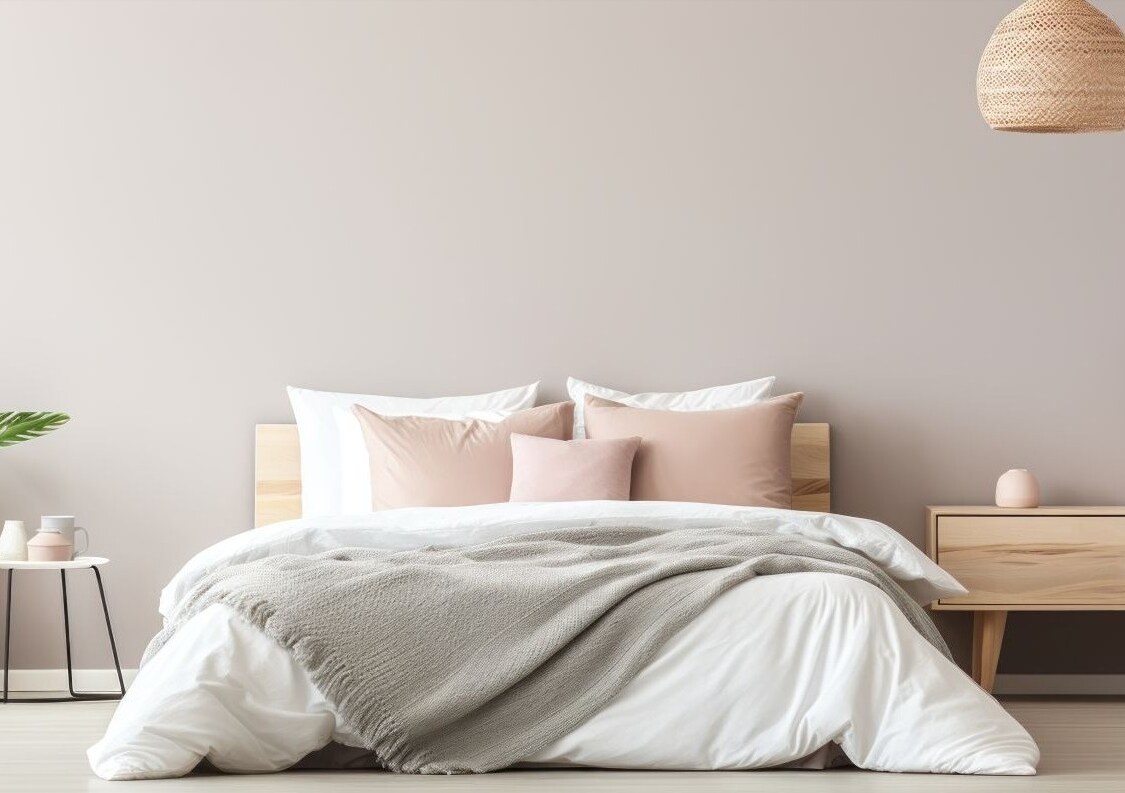
“Measure twice, buy once.” It is an old saying from the workshop, but it applies just as well to choosing a bed. There is nothing worse than falling in love with a beautiful new bed frame, only to discover it blocks the wardrobe door or leaves you with barely enough room to walk around.
Choosing the right bed size is about more than just fitting it through the bedroom door. It affects how well you sleep, how much you move during the night, and even the quality of your relationship if you share with a partner. In this guide, we will walk you through every standard UK bed size, explain how to match a bed to your room, and answer the most common questions shoppers ask.
Why Bed Size Matters for Your Sleep Quality
It might seem obvious, but many people underestimate just how much bed size affects sleep. According to Bed Advice UK, a standard double bed gives each person just 67.5cm of personal space. That is roughly the same width as a baby’s cot. Now imagine two average-sized adults sharing that space for eight hours. Every time one person turns over, the other feels it.
A 1995 National Bed Federation study found that before trying a larger bed, only 15% of couples would buy one. Afterwards, 50% said they would. A larger bed reduces partner disturbance, lets you change positions freely, and can even reduce morning arguments about who stole the duvet.
Standard UK Bed Sizes Explained
UK bed sizes follow fairly standardised dimensions, but there is more variety than most people realise. Which? magazine notes that adult mattresses actually come in ten different sizes, from a compact small single all the way up to a palatial emperor. Let us break them down.
Single and Small Single (75/90 x 190cm)
A standard single measures 90 x 190cm. This is the go-to size for children’s bedrooms, teenagers’ rooms, and single adults. Unless you are exceptionally tall or broad, a single provides enough space to roll over comfortably during the night.
However, there is a catch. The standard single is only 190cm long. If you are taller than 180cm (about 5 feet 11 inches), your feet may dangle over the edge. That is where the Euro single comes in, measuring 90 x 200cm. It offers the same width but an extra 10cm of length.
FlexiSpot offers the Kana solid wood bed frame in a 90 x 200cm size, which is perfect for taller teenagers, adults in smaller rooms, or guest bedrooms. The Euro single length means even your taller guests will sleep with their feet comfortably on the mattress. --altImgStart--{"link":"https://s3.springbeetle.eu/dev-de-s3-flexispot/commodity/item/Kana-img1-2_20260104_xv38TIcU.png","alt":" Japandi Solid Wood Bed Frame (Kana)"}--altImgEnd--
Double and Small Double (120/135 x 190cm)
A small double, also known as a queen-size or three-quarter bed, measures 120 x 190cm. It is 15cm narrower than a standard double. Two adults will find it snug, but it suits a single adult who likes to stretch out or a smaller master bedroom.
A standard double (135 x 190cm) gives each person just 67.5cm of space. That works for couples who enjoy sleeping close, but if either partner moves a lot during the night, a double can feel very cramped.
King Size (150 x 200cm)
The king-size bed measures 150 x 200cm. It is wider than a double by 15cm and longer by 10cm. According to Which?, around four in ten of their members own a king-size mattress, making it the most popular size on the market today.
The extra length is a game-changer for anyone over 180cm tall. The additional width gives each person roughly 75cm of personal space, which is noticeably more comfortable than a double. If you share a bed with a partner, a king-size is widely considered the minimum for a truly undisturbed night’s sleep.
The FlexiSpot Kana bed frame is available in a 150 x 200cm king size, offering the same Japandi design, solid wood construction, and whisper-quiet mortise and tenon joinery in this popular dimension. It is the sweet spot for most couples who want space without taking over the entire bedroom.
Super King (180 x 200cm)
The super king measures 180 x 200cm. It is exactly the same length as a king but 30cm wider, giving each person roughly 90cm of space. That is the same width as a standard single bed, meaning each partner effectively has their own individual sleeping area within the same bed.
Super king beds are pure luxury, but they require a large bedroom. As a rule of thumb, you should have at least 76cm of clearance between the bed and the walls or furniture to move around comfortably. A super king in a small room will feel oppressive and make daily tasks like making the bed or opening drawers a struggle.
The FlexiSpot Kana bed frame is also available in 180 x 200cm super king, allowing couples to enjoy the ultimate in sleeping space without compromising on style or stability.
--altImgStart--{"link":"https://s3.springbeetle.top/prod-common-bucket/commodity/item/Kana_20260421_IHUA0Y1V.png","alt":"Japandi Solid Wood Bed Frame (Kana)"}--altImgEnd--
A Note on European Sizes
If you have ever shopped at IKEA or looked at continental bed frames, you may have noticed that they come in different dimensions. European sizes include the Euro single (90 x 200cm), Euro double (140 x 200cm), and Euro king (160 x 200cm). These are slightly wider than their UK equivalents.
As Which? warns that if you buy a UK mattress for a bed frame designed to hold a European mattress, it will be too small. Always check whether your bed frame is designed for UK or European sizing before purchasing a mattress.
How to Choose the Right Bed Size for Your Room
Before you fall in love with a super king, grab a tape measure. Here is a simple three-step process.
Step 1: Measure your room: Note the length and width of the bedroom, as well as the positions of doors, windows, radiators, and plug sockets.
Step 2: Mark out the bed size: Use masking tape on the floor to mark the dimensions of the bed you are considering. Add 76cm (2ft 6in) to each side and the foot of the bed to allow for walking space and opening drawers.
Step 3: Consider the 1:3 ratio: Some designers suggest the bed should take up no more than one-third of the room. Most of us compromise. Just ensure you can walk around without squeezing sideways.
Frequently Asked Questions
Q1. Can I use one big mattress instead of two small ones for a couple?
Yes. Most couples prefer one large mattress. However, some opt for two singles (zip-and-link) so each person chooses their own firmness.
Q2. What if my room is small, but I want a King bed?
You have a few options. Consider a small double (120cm wide), which gives a single adult plenty of room. Alternatively, rearrange your bedroom furniture. Can the wardrobe go elsewhere? Could you use wall-mounted shelves instead of bedside tables? Every little bit of space helps.
Q3. Is bigger always better for sleep?
Not always. A bigger bed reduces partner disturbance, which improves sleep. But if it cramps your room, the stress may outweigh the benefit. Choose the largest bed that comfortably fits.
Q4. How do you determine your bed size?
Measure your room. Measure yourself (your height plus 10cm). Consider whether you sleep alone, with a partner, or with pets. Then choose the size that gives everyone enough space to move without overcrowding the bedroom.
Q5. Should a mattress be exactly the same size as a bed?
Yes. A mattress should fit snugly inside the bed frame with no gaps. Gaps can cause the mattress to shift, create uncomfortable edges, and even pose a safety risk for young children. Always buy a mattress that matches the stated size of your bed frame.
Q6. How do I know what bed is good for me?
A good bed supports your weight, keeps your spine aligned, and fits your sleeping position. Test by lying on your back with your hands behind your head. If your elbows hit your partner or the edge of the bed, go bigger.
Q7. What type of mattress is good for scoliosis?
People with scoliosis generally benefit from a medium-firm to firm mattress that provides strong support while contouring to the spine’s natural curves. Memory foam or hybrid mattresses with zoned support are often recommended. Always consult your doctor or physiotherapist for personalised advice.
Q8. What mattress is best for piriformis syndrome?
A medium-firm mattress that relieves pressure on the hips and buttocks is usually best for piriformis syndrome. Memory foam or latex mattresses can reduce pressure points. Avoid very soft mattresses that allow the hips to sink too deeply, as this can aggravate the condition.
Q9. What is the best mattress for ankylosing spondylitis?
For ankylosing spondylitis, a medium-firm to firm mattress that keeps the spine in a neutral alignment is generally recommended. Adjustable beds can also be helpful, as they allow you to elevate the head or knees to reduce morning stiffness. Again, professional medical advice is essential.
Invest in Space, Invest in Rest
Choosing the right bed size comes down to your height, your partner’s habits, and your room dimensions. Remember the elbow test: lie on your backs with your hands behind your heads. If your elbows do not touch, you have enough space. If they collide, size up.
The FlexiSpot Kana solid wood bed frame is available in the three most practical UK sizes: 90 x 200cm (Euro single), 150 x 200cm (king), and 180 x 200cm (super king). Whichever size suits your room and your sleep style, you will enjoy the stability of solid wood, the silence of Japanese joinery, and the timeless beauty of Japandi design.
--altImgStart--{"link":"https://s3.springbeetle.eu/dev-de-s3-flexispot/commodity/item/Kana-img1-1_20260104_JpdAzQsP.png","alt":"Japandi Solid Wood Bed Frame (Kana)"}--altImgEnd-- --shopstart--{"id":10010009,"link":10010009,"name":"Japandi Solid Wood Bed Frame","shortName":"Kana","url":"https://s3.springbeetle.eu/dev-de-s3-flexispot/commodity/item/1028_file_hedilaKanacatalog_20260311_TtTSy0WT.png","itemFootMarkType":"CUSTOMIZE","itemFootMarkInput":"Sale"}--shopend--
Disclaimer: This article is for informational purposes only. Medical conditions such as scoliosis, piriformis syndrome, and ankylosing spondylitis require individual assessment. Please consult a qualified healthcare professional for personalised advice.


_20260602_cc9a7609.png)


