

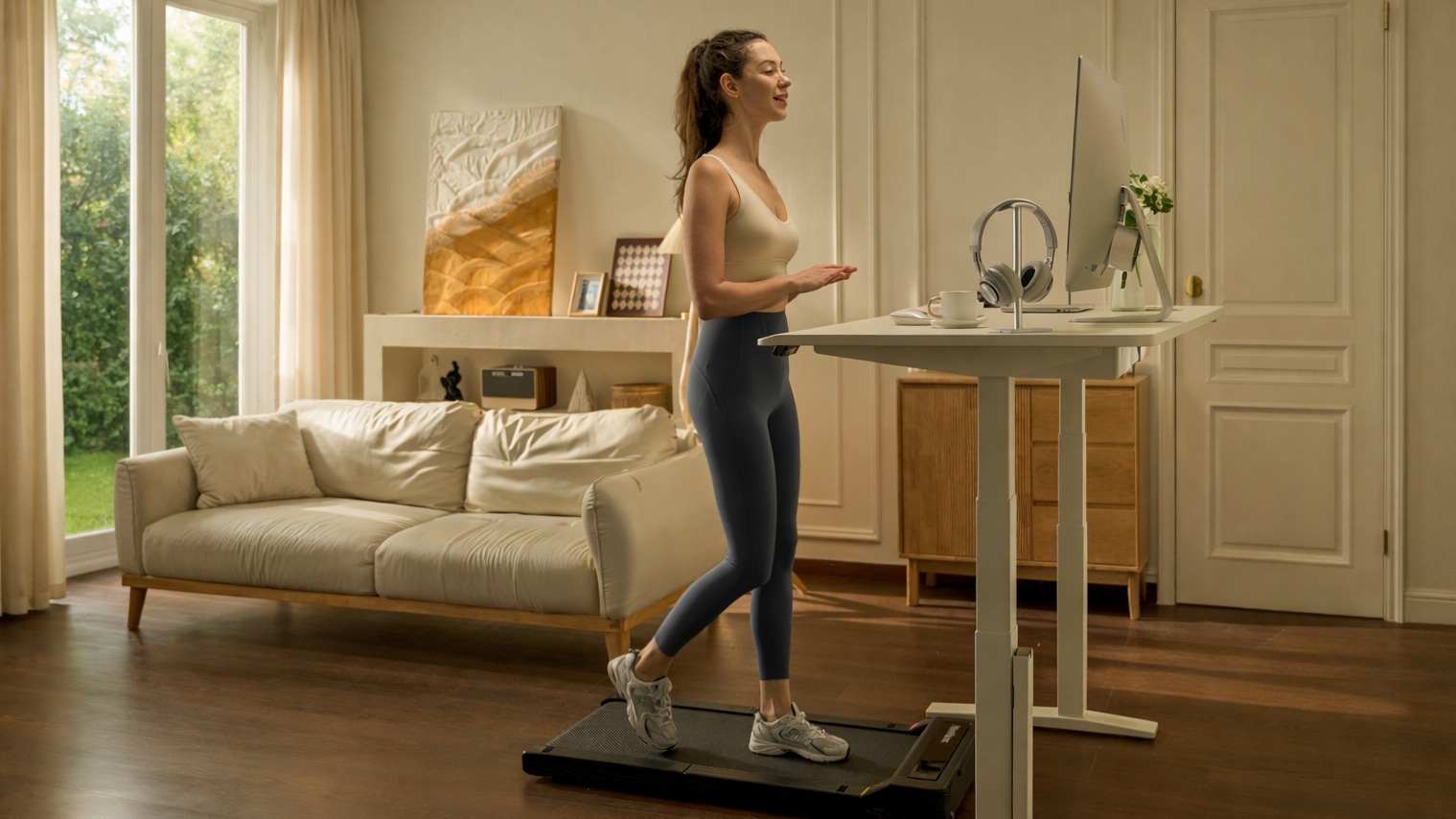
Introduction: Why Sitting Has Become a Modern Health Problem
Many of us spend far more time sitting than we realise. Long workdays at a desk, evenings on the sofa, and commuting all add up. Even people who exercise regularly often remain sedentary for most of the day, especially when working from home.
Over time, prolonged sitting can affect circulation, posture, energy levels, and overall wellbeing. That’s why health experts now focus not only on exercise but also on reducing uninterrupted sitting. The encouraging part is that meaningful change doesn’t require intense workouts or hours at the gym. In fact, short, regular movement breaks can make a real difference.
This raises an important question: can just 10 minutes a day on a walking pad help improve your health?
Why Just 10 Minutes of Daily Movement Matters
Short bursts of movement may seem insignificant, but they play an important role in counteracting long periods of sitting. When the body stays still for too long, muscles switch off, circulation slows, and stiffness gradually builds up—especially in the hips, lower back, and legs. Regular movement, even in small amounts, helps interrupt that cycle.
The World Health Organization emphasises that consistent physical activity, even at moderate intensities, supports cardiovascular health, improves circulation, and reduces the risk of chronic diseases over time. What matters most isn’t pushing to exhaustion, but returning to movement day after day.
Ten minutes of walking is often enough to wake the body up. It reactivates muscles, encourages blood flow, and gives joints a chance to move through a natural range of motion. Perhaps most importantly, it lowers the mental barrier to exercise. When movement feels manageable, it’s easier to repeat. Over time, those brief workouts integrate into your daily routine, becoming more sustainable than sporadic, ambitious workout plans. --altImgStart--{"link":"https://s3.springbeetle.eu/dev-de-s3-flexispot/commodity/item/Screenshot%202026-01-20%20141949_20260120_tLqWSPoN.png","alt":"MotionX Under Desk Treadmill (MotionX)"}--altImgEnd--
What Is a Walking Pad and How Does It Fit Into Daily Life?
A walking pad, also known as an under-desk treadmill, is designed for light, steady walking rather than running. Unlike traditional treadmills, walking pads are compact, quiet, and easy to store. They fit naturally into home offices and living spaces.
Their biggest advantage is flexibility. You can walk while working, reading emails, watching television, or taking a break between tasks. Instead of setting aside dedicated workout time, movement becomes part of your normal routine.
This makes walking pads especially appealing for people who struggle to find time for structured exercise or who want to stay active without disrupting their day.
Health Benefits of Using a Walking Pad Daily
- Reducing the Effects of Prolonged Sitting
Extended sitting is linked to stiffness, reduced circulation, and discomfort in the lower back and hips. The NHS highlights that breaking up sitting time with regular movement supports joint mobility and overall physical health.
Even light walking helps counter these effects by encouraging regular posture changes and muscle engagement.
- Improving Energy, Focus, and Mental Wellbeing
Many people notice that gentle movement improves concentration rather than reducing it. Walking increases oxygen flow to the brain, which can help maintain alertness and reduce afternoon fatigue. For those who work from home, a walking pad can provide a simple way to stay energised during long tasks or meetings.
- Supporting Weight and Metabolic Health
While ten minutes of walking won’t replace longer workouts, the cumulative effect matters. Daily movement contributes to calorie expenditure and helps regulate blood sugar levels. Over weeks and months, these small efforts add up—especially when paired with balanced nutrition and an active lifestyle.
The American Heart Association notes that regular moderate activity supports heart health when sustained consistently.
Making Movement Easier at Home and at Work
One of the biggest barriers to exercise is convenience. Walking pads remove many common obstacles: there’s no need to change clothes, travel to a gym, or block out large chunks of time. You can move at your pace, in your space.
This ease of access helps reduce the mental resistance that often stops people from being active. On busy days, even a short walking session is better than none—and far easier to maintain than an all-or-nothing approach.
The FlexiSpot Walking Pad / MotionX Treadmill
FlexiSpot’s walking pad and MotionX under-desk treadmill are designed specifically for everyday use. Their compact design allows them to fit easily under desks or furniture, making them suitable for both work and leisure time. --altImgStart--{"link":"https://s3.springbeetle.eu/dev-de-s3-flexispot/commodity/item/GP01-20250623-bannerImg-pc.png","alt":"Portable Under Desk Treadmill (MotionX-GP01)"}--altImgEnd-- --shopstart--{"id":1034003,"link":1034003,"name":"MotionX Under Desk Treadmill","shortName":"MotionX","url":"//s3.springbeetle.eu/prod-eu-s3/trantor/attachments/UK/GP01.png","itemFootMarkType":"NONE","itemFootMarkInput":"Sale"}--shopend--
They offer smooth, quiet operation and simple controls, making them practical for light daily walking rather than intense workouts. For people aiming to reduce sitting time and stay active at home, this kind of equipment supports consistency without complexity.
You can explore the MotionX treadmill here, depending on your location:
The 21 Days Workout Challenge with MotionX
To encourage consistent movement, FlexiSpot is running the 21 Days Workout Challenge with MotionX.
Campaign details:
- Purchase a MotionX treadmill between 2 February and 1 March
- Complete at least 20 minutes of exercise daily
- Maintain this routine for 21 consecutive days
- Receive a €99 / £99 / 499 zł cashback upon successful completion
Challenges like this work because they focus on habit-building rather than intensity. Committing to short, daily sessions makes consistency feel achievable and rewarding. For full terms and participation details, visit the official FlexiSpot website.
Is 10 Minutes Really Enough? Setting Realistic Expectations
Ten minutes should not serve as an end goal, but rather as a beginning point. For many people, once daily movement becomes routine, sessions naturally become longer. The key is removing pressure and allowing habits to develop gradually.
Consistency matters more than perfection. A short walk done every day is far more effective than an ambitious plan that’s difficult to maintain.
Conclusion: Small Steps, Long-Term Change
Reducing sitting doesn’t require a complete lifestyle overhaul. Sometimes, meaningful change begins with something as simple as stepping onto a walking pad for a few minutes each day.
Walking pads and under-desk treadmills make movement more accessible, especially for people working from home or spending long hours indoors. Combined with initiatives like the 21 Days Workout Challenge with MotionX, they support healthier routines built on consistency rather than intensity.
If you’re looking for a practical way to improve your health in the new year, starting with just ten minutes of daily movement could be the habit that finally sticks.


_20260602_cc9a7609.png)


