

Fitness culture has spent years telling us that results need to hurt. Then the evidence on walking came back, and it turns out the simplest form of movement we have might be doing more good than half the routines built to replace it.
Walking Doesn't Ask Much of You
Most exercise plans fail for the same reason: they demand too much too soon. Walking doesn't have that problem. You already know how to do it, you don't need equipment or a gym membership, and you can start today without any adjustment period.
You Don't Need 10,000 Steps to See Results
The 10,000-step target has been around since the 1960s, born from a Japanese pedometer marketing campaign rather than any clinical trial. A major 2025 study led by the University of Sydney, which reviewed 57 studies from more than ten countries, found that around 7,000 steps a day delivers most of the same benefits as 10,000, including meaningfully lower risks of cardiovascular disease, dementia, type 2 diabetes and depression. Beyond that point, the researchers found the extra gains levelled off for most outcomes. In other words, the bar for a genuinely useful daily walk is lower than most people assume.
It Fits Around a Busy Schedule
The NHS points out that even a brisk 10-minute walk counts towards the recommended 150 minutes of weekly activity for adults. That's a scale of commitment most people can actually stick to. No specialist kit, no recovery days, no need to plan your week around it. A walk before work, during a lunch break, or while on a call does the job.
Why More of That Walking Is Happening at Home
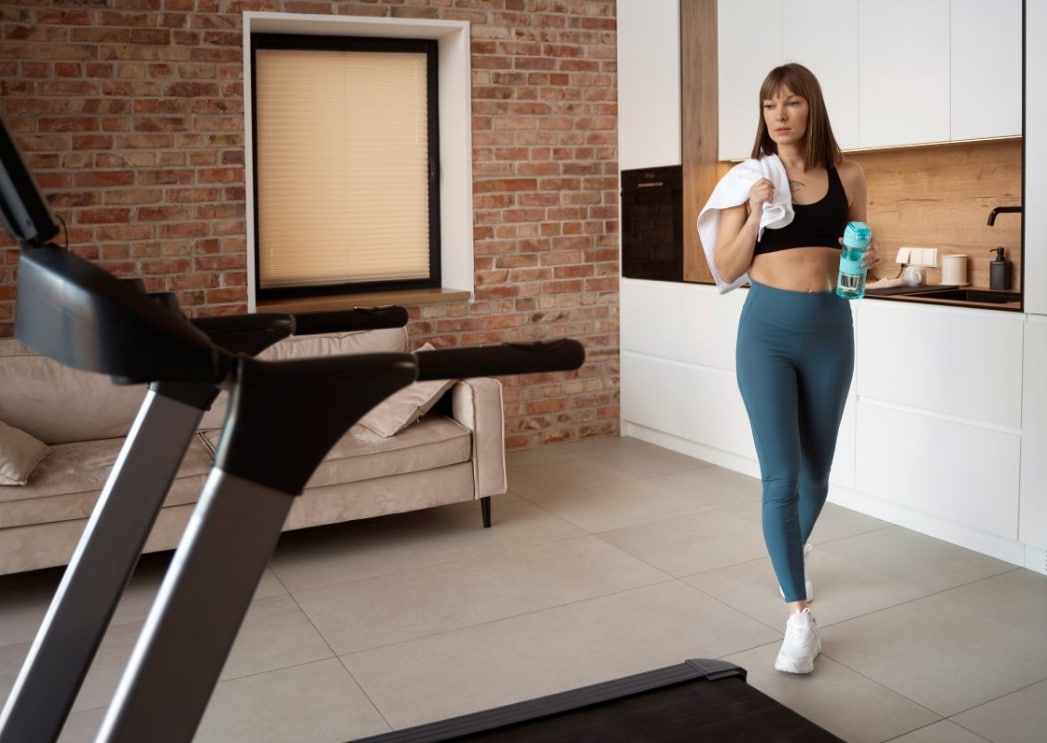
Walking is easy in theory. In practice, British weather, daylight hours, and the general friction of "getting ready to go outside" get in the way more often than people admit. That's part of why walking pads, also known as compact treadmills, have become one of the fastest-growing pieces of home fitness kit.
The Real Barriers Aren't Motivation, They're Logistics
Most people who skip their daily walk aren't lacking willpower. They're short on time, put off by rain, or simply don't want to change clothes and head out for a 20-minute round trip. A walking pad removes each of those obstacles. You can walk during a work call, while watching the news, or in ten-minute bursts between tasks, all without leaving the room.
How a Walking Pad Solves Them
A good walking pad needs to do three things well: run quietly enough not to disturb a household, fold away without becoming a storage headache, and hold up to daily use without needing constant maintenance. This is where FlexiSpot's PortaGo walking pad earns its place as a genuinely practical option for home users juggling busy schedules. Its brushless motor has been fatigue-tested through 200,000 cycles, roughly double the standard expected of commercial machines, and runs at under 55 dB, quiet enough to use during a video call without anyone noticing. The 41 cm wide belt gives more room to walk naturally than the narrower pads common in this category, and when you're done, PortaGo folds down to about 0.3 square metres and weighs 18.5 kg, light enough to tuck under a sofa or into a corner. --altImgStart--{"link":"https://s3.springbeetle.eu/prod-eu-s3/commodity/item/image_20260722_I8uxToOP.png","alt":"180° Foldable Walking Pad with Brushless Motor (PortaGo)"}--altImgEnd--
What to Look For in a Home Walking Pad
If you're weighing up your own options, a few features are worth checking before you buy.
Motor Type and Noise Level
Brushless motors tend to run quieter and last longer than brushed alternatives, since there's less friction and fewer parts to wear down. Noise matters more than people expect, particularly in flats or homes with shared walls.
Belt Width and Weight Capacity
A narrow belt might look sleek in photos, but it makes for an awkward, cramped stride in real use. Check the running area and the maximum user weight to make sure the machine suits how you'll actually use it.
Folding and Storage
If a walking pad is a hassle to store, it tends to end up in a cupboard rather than under your desk. Look for something that folds down small and is light enough for one person to move without help.
Final Thoughts
Walking has quietly become one of the most evidence-backed forms of exercise available, and it's easier to fit into daily life than almost anything else on offer. The main barrier for most people isn't the walking itself; it's finding a way to do it consistently around work, weather and everything else competing for their time. A compact walking pad like PortaGo removes most of that friction, letting you turn spare minutes throughout the day into genuine progress towards a healthier routine, without needing to leave the house. --altImgStart--{"link":"https://s3.springbeetle.eu/dev-de-s3-flexispot/commodity/item/WP01-20251028-img5-2-pc.png","alt":"180° Foldable Walking Pad with Brushless Motor (PortaGo)"}--altImgEnd-- --shopstart--{"id":1438001,"link":1438001,"name":"180° Foldable Walking Pad with Brushless Motor","shortName":"PortaGo","url":"https://s3.springbeetle.eu/dev-de-s3-flexispot/commodity/item/1028_file_PortaGofront.png","itemFootMarkType":"NONE","itemFootMarkInput":"Mid-Month Sale"}--shopend--
Looking to build a fuller home workspace around movement? See FlexiSpot's guide to height-adjustable desks for pairing a walking pad with a sit-stand setup.


_20260602_cc9a7609.png)


