

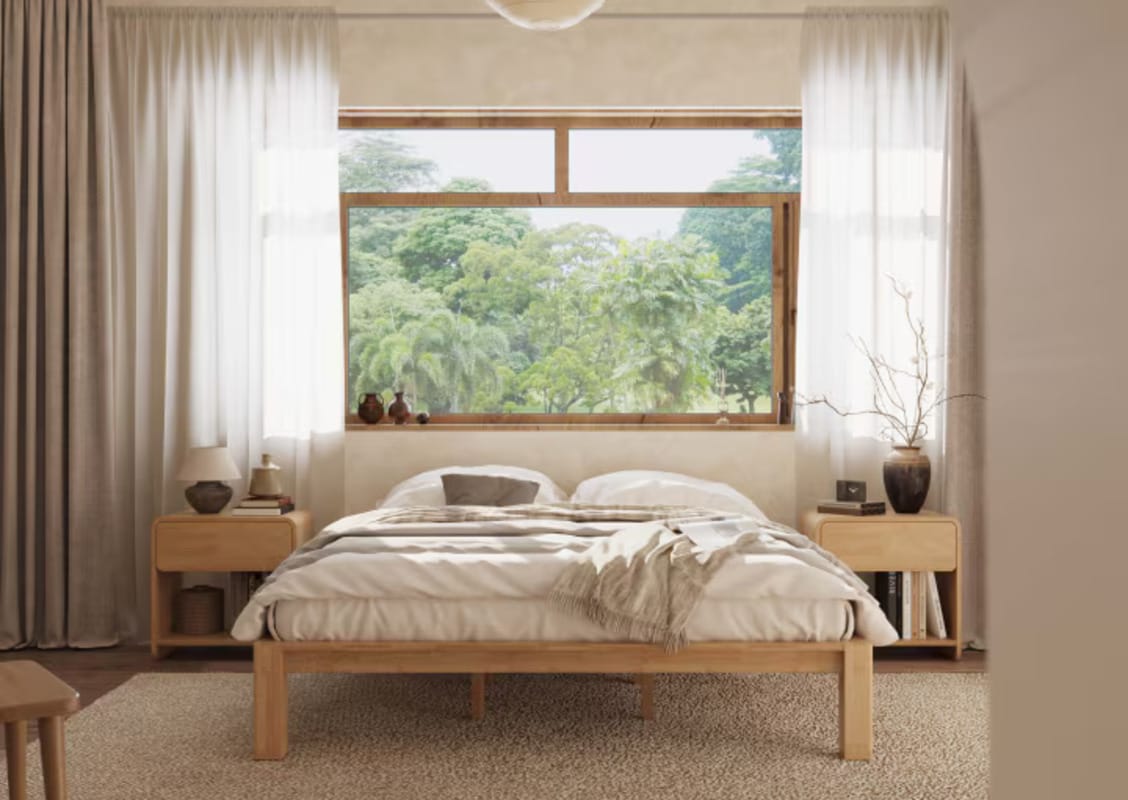
As more people move away from disposable furniture and toward long-lasting, thoughtfully made pieces, Japanese joinery beds are gaining renewed interest in European homes. These beds stand out not because of ornate decoration, but because of how they are built, using precise craftsmanship rather than screws, bolts, or metal fittings.
At a time when durability, sustainability, and quiet comfort matter more than ever, Japanese joinery offers an alternative approach to bedroom furniture. It prioritises structural integrity, natural materials, and longevity, while still fitting seamlessly into modern interiors.
What Is Japanese Joinery?
Japanese joinery refers to traditional woodworking techniques that connect pieces of wood using carefully shaped joints rather than nails or screws. These methods have been used for centuries in Japanese architecture, furniture, and temples, many of which are still standing today. --altImgStart--{"link":"https://s3.springbeetle.eu/dev-de-s3-flexispot/commodity/item/Screenshot%202026-02-02%20175153_20260202_R81UBT0F.png","alt":"Japandi Solid Wood Bed Frame (Kana), Hybrid Mattress with Ergonomic Design (BM3)"}--altImgEnd--
Each joint is designed to interlock precisely, distributing weight evenly and allowing the structure to remain stable over time. This approach not only improves strength, but also reduces movement, noise, and wear.
The Japan National Tourism Organization highlights Japanese craftsmanship as a cultural tradition built around precision, patience, and respect for natural materials.
Why Japanese Joinery Beds Are Different
Strength Without Metal Hardware
Unlike conventional bed frames that rely on screws or brackets, Japanese joinery beds use snug-fitting wooden joints. These joints tighten under pressure, which means the bed often becomes more stable the longer it is used.
Because there are no metal parts to loosen over time, the structure maintains its integrity even after repeated assembly or relocation.
Quiet, Stable Sleep
One of the most noticeable benefits of joinery beds is how quiet they are. Without metal-on-metal contact, friction is reduced, which significantly minimises squeaking or creaking during movement.
For light sleepers or couples, this contributes to a more restful sleep environment.
Sustainability and Long-Term Value
Natural Materials and Responsible Sourcing
Japanese joinery beds are typically made from solid wood rather than engineered composites. When responsibly sourced, solid wood furniture offers both environmental and practical benefits, including durability and repairability.
Solid wood also ages well, developing character over time rather than deteriorating.
Designed to Last for Decades
The Forest Stewardship Council (FSC) notes that well-made wooden furniture can significantly reduce waste by extending product lifespan and reducing the need for replacement.
Japanese joinery beds reflect this philosophy by prioritising longevity over trends.
--altImgStart--{"link":"https://s3.springbeetle.eu/dev-de-s3-flexispot/commodity/item/Screenshot%202026-01-30%20145324_20260202_ahy3EYKj.png","alt":"Japandi Solid Wood Bed Frame (Kana)"}--altImgEnd--
Product Spotlight: FlexiSpot Kana Solid Wood Bed Frame
The FlexiSpot Kana Bed Frame brings Japanese joinery principles into modern European bedrooms in a practical, accessible way.
Inspired by traditional joinery techniques, the Kana frame uses a snug, interlocking structure that requires no tools and can be assembled in just 10 minutes. This design minimises movement and noise while remaining easy to disassemble and relocate.
Crafted from 100% solid wood, the Kana bed frame is FSC-certified and made entirely from upcycled rubberwood harvested at the end of its latex-producing lifecycle. This supports sustainability without compromising strength.
The frame also features 25 cm of under-bed clearance, allowing for airflow, moisture prevention, and convenient storage, an important consideration for long-term mattress hygiene.
Learn more about the Kana bed frame here!
--shopstart--{"id":10010009,"link":10010009,"name":"Japandi Solid Wood Bed Frame","shortName":"Kana","url":"https://s3.springbeetle.eu/dev-de-s3-flexispot/commodity/item/1028_file_20251022-074841.542-4.png","itemFootMarkType":"NEW"}--shopend--
How Mattress Choice Complements Japanese Joinery Beds
Why Support Matters
Because joinery beds are built to be stable and firm, pairing them with the right mattress is essential for balanced comfort. A mattress should provide pressure relief while maintaining spinal alignment.
Sleep specialists at the Sleep Foundation emphasise that mattress support plays a key role in reducing pressure points and supporting healthy sleep posture. --altImgStart--{"link":"https://s3.springbeetle.eu/dev-de-s3-flexispot/commodity/item/HM2501-20251020-bannerImg-pc.png","alt":"Hybrid Mattress with Ergonomic Design (BM3)"}--altImgEnd--
FlexiSpot BM3 Hybrid Mattress
The FlexiSpot BM3 Hybrid Mattress is well suited to solid wood joinery beds. Its dual firmness design (H2/H3) allows sleepers to choose between medium-soft and medium-firm comfort by simply flipping the mattress.
High-density 3.4 PCF memory foam resists sagging, while 348 individually pocketed springs adapt to body movement and weight distribution. Four-sided reinforced foam edges enhance stability and prevent slipping, complementing the solid structure of a joinery bed frame.
The breathable bamboo fibre cover, made from GRS-certified recycled materials, supports airflow and hygiene while remaining skin-friendly and hypoallergenic.
Explore the BM3 mattress here!
--shopstart--{"id":1432001,"link":1432001,"name":"Hybrid Mattress with Ergonomic Design","shortName":"BM3","url":"//s3.springbeetle.eu/prod-eu-s3/trantor/attachments/UK/品类.png","itemFootMarkType":"NEW"}--shopend--
Is a Japanese Joinery Bed Right for You?
Japanese joinery beds are ideal for people who value:
● Long-term durability
● Quiet, stable sleep
● Natural materials
● Minimalist or Japandi interiors
They are particularly well suited to those who move homes occasionally, as the tool-free assembly makes reassembly simple without degrading structural integrity.
However, those who prefer ornate designs or ultra-soft sleeping setups may want to carefully consider mattress pairing and overall bedroom style.
Conclusion: Craftsmanship That Supports Better Sleep
A Japanese joinery bed is more than a design choice, it’s a commitment to craftsmanship, longevity, and thoughtful living. By replacing metal hardware with precise wooden joints, these beds offer stability, silence, and sustainability that mass-produced alternatives often lack.
With modern interpretations like the FlexiSpot Kana bed frame, Japanese joinery principles can be enjoyed without complexity, while pairing the frame with a supportive mattress such as the BM3 ensures comfort matches craftsmanship.
For anyone seeking a bed that is built to last, feels solid night after night, and aligns with mindful living, a Japanese joinery bed is a compelling choice.


_20260602_cc9a7609.png)


