

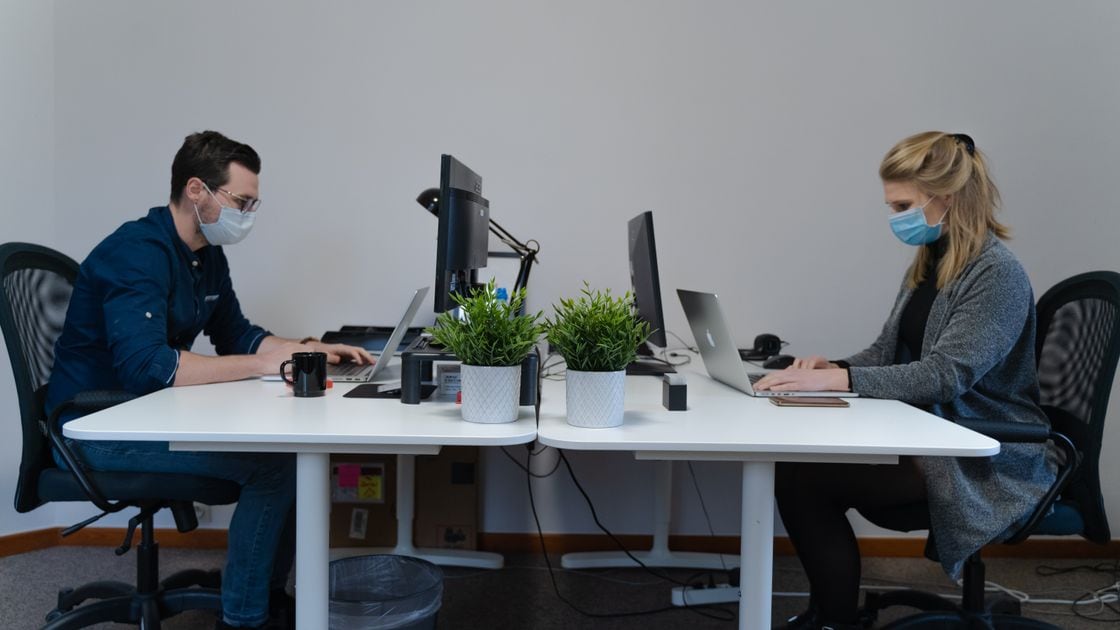
Most home offices are built around one desk. We work, answer messages, eat lunch, browse the internet and sometimes relax in exactly the same spot. While convenient, this arrangement can make it difficult to distinguish focused work from lighter activities and genuine breaks.
The two-desk method offers a different approach. Instead of expecting one workspace to support everything, it separates concentrated work from less demanding activities.
This does not necessarily mean buying two desks. The principle is about creating two distinct surfaces or working zones, each with a clear purpose.
For people struggling with distractions, clutter or blurred work-life boundaries, this simple change may make the working day feel more organised and intentional.
What Is the Two-Desk Method?
The two-desk method is a workspace organisation strategy built around separating different types of activity.
Desk One: Your focus zone
The first surface is reserved for demanding tasks that require concentration.
This might include writing, coding, analysing data, completing reports or studying.
Keep this area relatively clear, with only the equipment needed for focused work.
The intention is to reduce unnecessary distractions and make it easier to begin demanding tasks without first reorganising the desk.
Desk Two: Your flexible zone
The second surface accommodates lighter activities such as planning, reading, reviewing documents or informal discussions.
It may also provide somewhere to step away from the main workstation during a short pause.
However, a genuine break should involve temporarily disengaging from work rather than simply moving to another surface to continue checking emails.
Why separation matters
Different tasks place different demands on attention.
Creating distinct zones may help some people establish clearer behavioural boundaries between concentrated work and lighter activities.
The approach is a practical organisational technique rather than a scientifically established productivity system. Its effectiveness will depend on individual preferences, available space and working habits.
The Psychology Behind Separate Workspaces
Our surroundings can influence how we approach different activities.
Environmental cues shape routines
Many people associate particular spaces with specific behaviours.
A dining table suggests eating, while a sofa usually signals relaxation. A designated workstation can similarly become associated with concentration.
Separating focused tasks from casual activities may strengthen these everyday cues.
However, the benefit comes from consistent habits rather than furniture alone.
Fewer distractions during focused work
A workspace filled with paperwork, unfinished projects, snacks and personal belongings can make it harder to concentrate.
Keeping one surface reserved for priority tasks reduces the need to make constant decisions about where to work.
Meanwhile, the secondary zone can accommodate less demanding activities without overcrowding the main desk.
Breaks support recovery
Research supports the value of stepping away from demanding work.
A systematic review and meta-analysis published in PLOS ONE, involving 2,335 participants across 22 independent samples, found that micro-breaks produced small but statistically significant improvements in energy and fatigue.
However, the researchers did not find a significant overall improvement in performance.
This suggests that breaks are valuable for recovery, even when they do not immediately make someone more productive.
How to Create Two Working Zones
A two-desk setup should reflect your home and the tasks you perform most frequently.
Use separate surfaces when space allows
In a larger home office, two smaller desks can serve different purposes.
One might accommodate monitors, a keyboard and essential work equipment, while the other provides a clear surface for reading or planning.
Positioning them apart can create a noticeable transition between tasks.
Make use of corners
A corner workstation can provide two distinct working areas without requiring separate pieces of furniture.
An L-shaped standing desk offers a particularly practical arrangement because each side can serve a different purpose.
The FlexiSpot E7L L-shaped standing desk provides an extended working surface with electric height adjustment.
Its L-shaped configuration allows users to organise equipment on one side while keeping the other available for paperwork, reading or alternative tasks.
Keep the zones visually different
A small change in organisation can reinforce the purpose of each surface.
For example, keep monitors and technical equipment in the focus zone, while placing a notebook, desk lamp or reading materials in the secondary area.
Avoid filling both surfaces with identical clutter. --altImgStart--{"link":"https://s3.springbeetle.eu/prod-eu-s3/commodity/item/E7L%202026-10-27%20102341_20261027_12WyRxB6.png","alt":"Premium L-shaped Standing Desk (E7L)"}--altImgEnd--
Why an L-Shaped Standing Desk Works Well
Not everyone has room for two separate desks.
Two surfaces within one workstation
An L-shaped desk effectively creates two connected working areas.
This makes it possible to separate activities without requiring additional furniture or sacrificing valuable floor space.
For instance, one section might support computer-based work while the other accommodates drawing, reviewing documents or planning.
More flexibility throughout the day
A height-adjustable desk also allows users to alternate between sitting and standing.
The E7L's adjustable design supports these changes while retaining the additional surface area of a corner workstation.
The Health and Safety Executive's guidance on workstation posture recommends suitable desk arrangements that allow relaxed shoulders, comfortable screen positioning and supported working postures.
Better organisation for multiple tasks
A separate surface for paperwork can reduce the temptation to stack documents around the keyboard.
It also makes switching between digital and non-digital tasks easier without repeatedly moving equipment.
How to Use the Two-Desk Method Throughout the Day
The method becomes more useful when paired with a consistent routine.
Start with your most demanding task
Begin the morning in the focus zone.
Keep notifications limited where practical and concentrate on one priority before moving towards lighter activities.
Switch zones between tasks
After completing a focused session, move to the secondary surface for planning, reading or reviewing your next steps.
This physical transition can help signal a change in working mode.
Take proper breaks away from work
The secondary surface should not become another place for uninterrupted working.
The HSE recommends short, frequent breaks from display screen equipment, preferably involving movement or a change of activity.
Stand, walk, stretch or leave the workspace altogether when taking a genuine break.
--altImgStart--{"link":"https://s3.springbeetle.eu/prod-eu-s3/commodity/item/pexels-pixabay-265125_20261027_6SKTcmAE.jpg"}--altImgEnd--
Common Mistakes to Avoid
Creating two cluttered desks
More surface area can encourage unnecessary accumulation.
Keep each zone organised and give frequently used items a designated place.
Confusing task switching with recovery
Moving from one desk to another while continuing to work does not automatically provide rest.
Include proper breaks throughout the day.
Buying furniture before assessing your needs
A second surface is only worthwhile if it improves how you work.
For smaller homes, rearranging an existing desk or using an L-shaped layout may be more practical.
Final Thoughts
The two-desk method offers a simple way to organise demanding work, lighter activities and transitions throughout the day.
By creating separate zones, it may become easier to maintain a clear workspace, manage distractions and establish more deliberate working habits.
An L-shaped standing desk such as the FlexiSpot E7L can support this approach without requiring two completely separate desks.
The important principle is not the amount of furniture you own. It is giving each activity an appropriate space while remembering that genuine rest still requires stepping away from work. --shopstart--{"id":620009,"link":620009,"name":"Premium L-shaped Standing Desk","shortName":"E7L","url":"//s3.springbeetle.eu/prod-eu-s3/trantor/attachments/UK/ET223L(IB)-E7L-Main.png","itemFootMarkType":"NONE","itemFootMarkInput":"-£180"}--shopend--


