

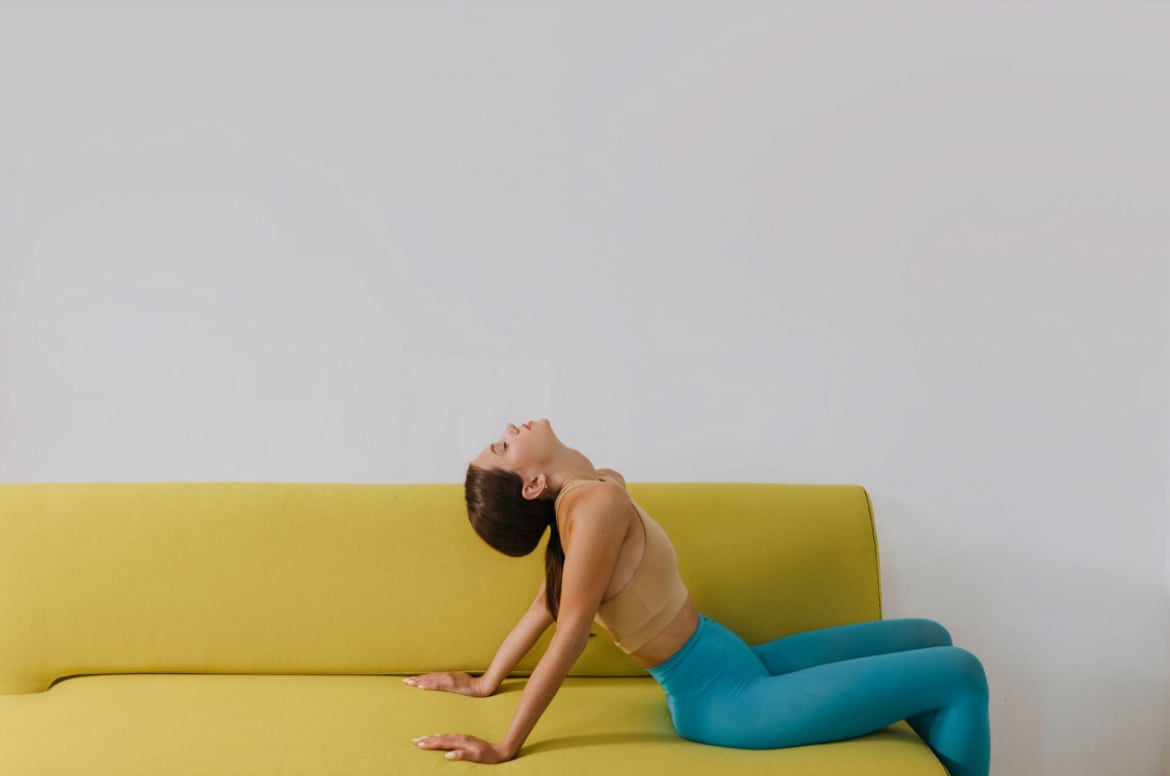
It usually happens without us noticing. A few hours into the working day, our shoulders creep upwards, our backs begin to round and our heads move closer to the screen. What started as a comfortable sitting position gradually becomes something much less supportive.
This is sometimes described as posture drift, where our sitting position changes as we become absorbed in work or begin to feel tired.
The solution does not necessarily involve expensive equipment or maintaining perfect posture throughout the day. Sometimes, a short movement routine is enough to remind us to change position.
That is where the 3-3-3 rule comes in. This simple, memorable framework encourages desk workers to stand, move and reset their posture without making exercise another complicated task.
What Is the 3-3-3 Rule?
The 3-3-3 rule is a straightforward movement habit built around three numbers.
Every three hours
Use a three-hour checkpoint to perform a deliberate posture reset. It provides a memorable reminder during a busy working day.
However, this should not be your only movement break. The Health and Safety Executive recommends taking short, frequent breaks from display screen work, ideally before fatigue develops. Its guidance suggests that five to ten minutes every hour is generally preferable to longer, less frequent breaks.
Think of the three-hour checkpoint as an additional structured reset alongside regular movement.
Stand for three minutes
Move away from your usual sitting position and spend three minutes standing or walking comfortably.
This gives you an opportunity to straighten your legs, relax your shoulders and stop looking at the screen.
Complete three movements
Within those three minutes, perform three gentle movements lasting approximately 30 seconds each. Use the remaining time to walk, breathe naturally and change position.
The movements are designed to address areas that commonly feel stiff during desk work: the shoulders, upper back and lower body. --altImgStart--{"link":"https://s3.springbeetle.eu/prod-eu-s3/commodity/item/pexels-karola-g-8546816_20261026_rBHIxeUN.jpg"}--altImgEnd--
Movement One: Release Your Shoulders
The shoulders often carry tension during prolonged computer use, particularly when typing or using a mouse.
How to perform shoulder rolls
Stand comfortably with your feet approximately hip-width apart.
Let your arms relax beside your body and slowly roll both shoulders backwards in smooth circles.
Continue for around 15 seconds before reversing direction for another 15 seconds.
Avoid forcing the movement or shrugging aggressively. The aim is to release tension gently rather than stretch as far as possible. --altImgStart--{"link":"https://s3.springbeetle.eu/prod-eu-s3/commodity/item/pexels-pavel-danilyuk-6339465_20261026_0iyu30ut.jpg"}--altImgEnd--
Why it helps
Shoulder rolls introduce movement to an area that often remains relatively still during concentrated work.
They also encourage awareness of whether your shoulders are raised unnecessarily.
The NHS provides gentle mobility exercises that demonstrate how controlled upper-body movements can support flexibility and comfort.
Movement Two: Open Your Chest and Upper Back
Working at a computer often involves reaching forwards towards a keyboard or mouse.
Over time, this position can leave the chest and upper back feeling stiff.
How to perform a chest opener
Stand upright with your arms relaxed.
Gently move your shoulders backwards and bring your arms slightly behind your body, opening the chest.
Hold the position briefly, release and repeat for approximately 30 seconds.
Keep your neck relaxed and avoid excessively arching your lower back.
--altImgStart--{"link":"https://s3.springbeetle.eu/prod-eu-s3/commodity/item/2148806668_20261026_M66r9OIQ.jpg"}--altImgEnd--
Why it helps
This movement provides a change from the forward-reaching position commonly used during desk work.
It also encourages a more comfortable upper-body position without demanding that you hold your shoulders backwards throughout the day.
The aim is movement and variety, not forcing the body into one supposedly perfect posture.
Movement Three: Wake Up Your Legs
The final movement focuses on the lower body, which can remain inactive during prolonged sitting.
How to perform calf raises
Stand with your feet flat on the floor, using a stable desk or wall for balance if needed.
Slowly lift your heels, rising onto the balls of your feet.
Lower your heels with control and repeat for approximately 30 seconds.
Keep the movement comfortable and avoid bouncing.
--altImgStart--{"link":"https://s3.springbeetle.eu/prod-eu-s3/commodity/item/85023_20261026_7mlFSarx.jpg"}--altImgEnd--
Why it helps
Calf raises activate muscles in the lower legs and introduce gentle movement after sitting.
They are particularly convenient because they require very little space and no special equipment.
After completing the exercise, use the remaining time to walk around the room or refill your water bottle.
Why Small Posture Resets Matter
The benefits of movement do not depend entirely on long exercise sessions.
The body benefits from variation
Even a comfortable sitting position can become tiring when maintained for several hours.
Changing position redistributes pressure and allows different muscle groups to move.
The HSE's guidance on workstation posture also emphasises comfortable screen positioning, supported seating and relaxed shoulders.
Movement creates a mental break
A short movement routine can interrupt the feeling of being stuck at a desk.
Stepping away from the screen provides an opportunity to reset attention before returning to a demanding task.
Short routines are easier to remember
The greatest advantage of the 3-3-3 framework is its simplicity.
There is no equipment to prepare, exercise programme to follow or separate workout space required.
Three movements can be completed beside almost any workstation.
Make the 3-3-3 Rule Part of Your Workday
A posture reset is most useful when it becomes an ordinary habit.
Connect it to your schedule
Try using a natural point in the working day, such as late morning or mid-afternoon, as your three-hour checkpoint.
You might complete the routine after a meeting or before beginning another focused work session.
Keep moving between resets
Do not remain seated continuously while waiting for the next checkpoint.
Stand during calls, walk during lunch and take brief screen breaks throughout the day.
Adjust movements to your ability
The routine should always feel comfortable. If standing or calf raises are unsuitable, choose accessible seated movements instead.
Anyone experiencing persistent pain, dizziness or mobility difficulties should seek appropriate professional guidance.
Common Mistakes to Avoid
Treating the rule as a medical prescription
The 3-3-3 rule is a practical habit framework, not a clinically established treatment or officially recommended break schedule.
Its purpose is to make movement easier to remember.
Moving too aggressively
Posture resets should be gentle. Sharp pain, forced stretching or sudden movements are not necessary.
Ignoring workstation setup
Movement breaks are useful, but they cannot compensate entirely for unsuitable desk height, poor screen positioning or an unsupported chair.
Your workstation should remain comfortable between breaks.
Final Thoughts
The 3-3-3 rule offers a simple way to interrupt posture drift during a busy working day.
By using a three-hour checkpoint, standing for three minutes and completing three gentle movements, desk workers can introduce a memorable routine without disrupting their workflow.
The important principle is not achieving perfect posture. It is recognising when the body has been still for too long and giving it opportunities to move.
Combine the 3-3-3 routine with more frequent breaks, a comfortable workstation and everyday walking. Small, consistent changes can make desk work feel less static and more comfortable.


