


A Comfy Bed Leads to A Comfy Life
Beds are often judged by appearance alone, yet much of their impact lies beneath the surface. The way a bed frame is constructed affects not only how it looks, but how it feels night after night, whether it remains stable, stays quiet, and supports restorative sleep. Joinery beds, rooted in centuries-old craftsmanship, offer a quietly effective alternative to conventional metal-fitted frames.
By relying on precise wooden connections rather than screws or brackets, joinery beds prioritise structural integrity and long-term comfort over quick assembly shortcuts.
The History of Mortise and Tenon Joinery
A Craft Shared Across Cultures
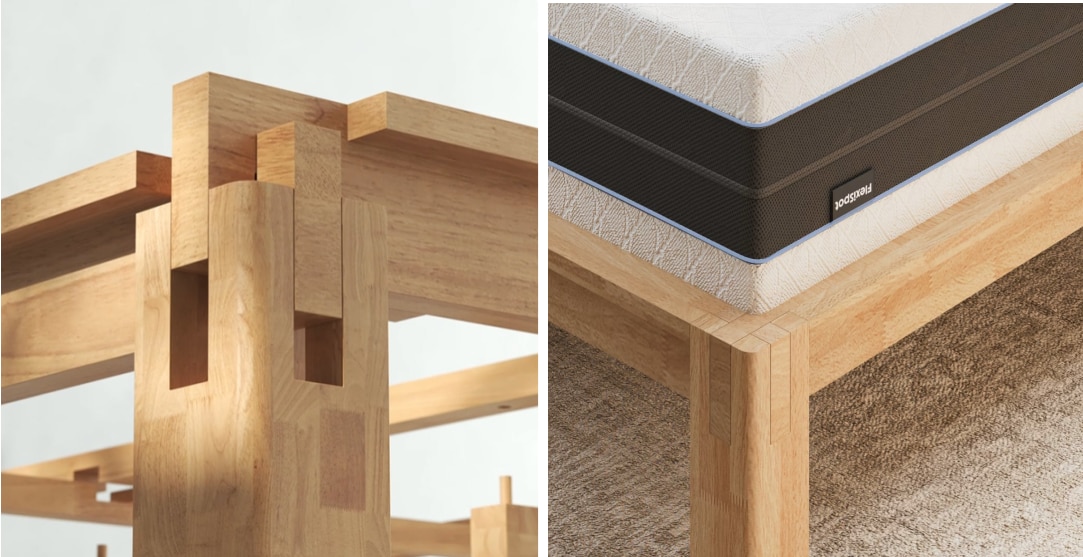
Mortise and tenon joinery is one of the oldest woodworking techniques in the world. Found in traditional Japanese architecture and classical European furniture alike, it involves inserting a shaped “tenon” into a corresponding “mortise” cavity, creating a strong, interlocking joint.
In Japanese craftsmanship, this technique evolved into highly refined systems designed to withstand movement, humidity changes, and time itself, all without metal fasteners. The result is furniture that holds together through balance and precision rather than force.
Why It Endures
Unlike screws, which can loosen over time, well-made joinery tightens under load. As weight is applied, the joints settle more firmly into place, reinforcing stability rather than compromising it. This principle has been documented in traditional Japanese timber construction, where joinery structures have endured for centuries.
How Joinery Beds Work
Metal-Free Construction
Joinery beds eliminate many of the weak points found in conventional bed frames. Without metal fittings, there are fewer components that can shift, flex, or degrade. Wood-on-wood connections distribute weight evenly across the structure, reducing stress on individual joints.
Self-Locking Mechanisms
Well-designed joinery relies on gravity and geometry. The interlocking structure naturally resists lateral movement, creating a frame that feels grounded and secure once assembled. This design also allows for tool-free assembly, as the structure itself provides the locking force.
Key Advantages of Joinery Bed Frames
Stability That Lasts
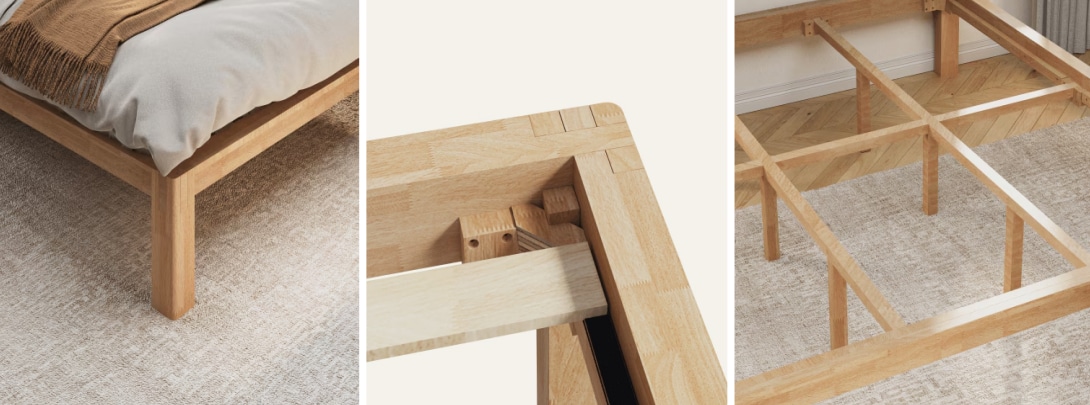
One of the most noticeable benefits of a joinery bed is its stability. Traditional metal-fitted frames often develop wobble as screws loosen or fittings wear. Joinery frames, by contrast, become more secure as the components settle together.
This enhanced stability supports even weight distribution, which is particularly important for sleep quality. Research from the Sleep Foundation notes that a stable sleep surface contributes to better spinal alignment and reduced nighttime disturbances.
Reduced Noise and Friction
Creaking and squeaking are common complaints with metal bed frames. These noises are usually caused by friction between metal components or slight movements at connection points. Joinery beds minimise these issues by replacing metal-on-metal contact with snug wooden joints.
The absence of loose fittings means fewer micro-movements, resulting in a noticeably quieter sleep environment — especially important for light sleepers or shared bedrooms.
Supporting Better Sleep
Quiet, stable furniture contributes to uninterrupted rest. Even subtle noises or shifts can trigger micro-awakenings that disrupt sleep cycles. By reducing these disturbances, joinery beds help create conditions more conducive to deeper, more consistent sleep.
The NHS recognises environmental stability, including noise reduction and physical comfort, as a factor in maintaining healthy sleep patterns.
Joinery vs Conventional Metal Bed Frames
Conventional Frames
Most modern bed frames rely on metal brackets, screws, and bolts. While initially secure, these components are subject to loosening due to movement, weight changes, and repeated use. Over time, this can lead to instability and noise.
Metal fittings also concentrate stress at specific points, increasing wear and reducing overall lifespan.
Joinery Frames
Joinery distributes stress across the entire structure. The joints are designed to move subtly with the wood, accommodating natural expansion and contraction. This flexibility enhances longevity and maintains structural integrity without constant tightening or maintenance.
Why This Structure Remains ‘Invisible but Vital’
Joinery beds rarely advertise their construction at first glance. The strength lies within the connections — unseen but essential. This philosophy reflects a broader design approach that values function as much as form.
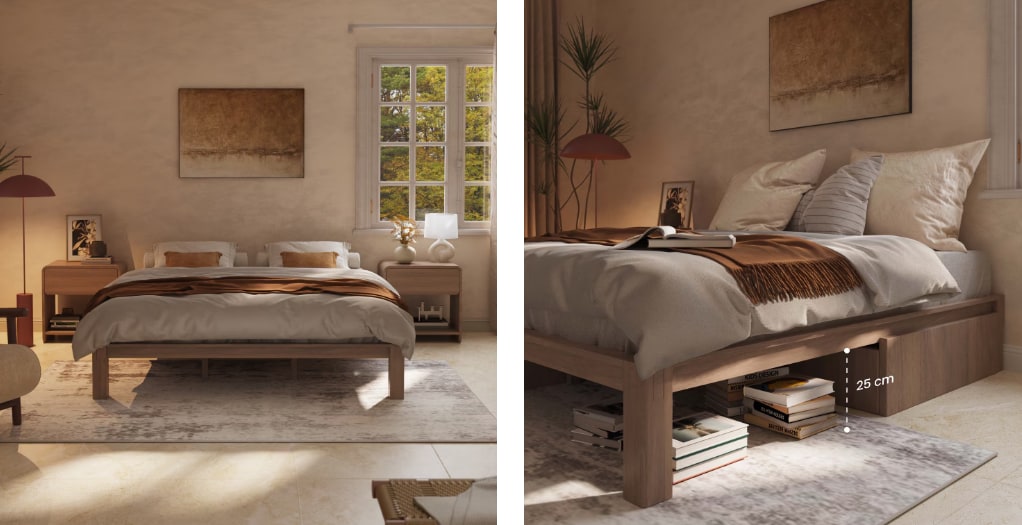
The Kana solid wood bed frame is a contemporary example of this tradition. Built using Japanese joinery principles, it assembles without tools in around 10 minutes while forming a snug, interlocking structure that minimises movement and noise. --altImgStart--{"link":"https://s3.springbeetle.eu/dev-de-s3-flexispot/commodity/item/BF210T-20251013-bannerImg-pcNew1.png","alt":"Solid Wood Bed Frame with Easy Assembly (Kana)"}--altImgEnd-- --shopstart--{"id":10010009,"link":10010009,"name":"Japandi Solid Wood Bed Frame","shortName":"Kana","url":"https://s3.springbeetle.eu/dev-de-s3-flexispot/commodity/item/1028_file_20251022-074841.542-4.png","itemFootMarkType":"NEW"}--shopend--
Crafted from 100% solid wood and certified by FSC, the frame uses upcycled rubberwood sourced at the end of its latex-producing lifecycle. The 25cm under-bed clearance promotes airflow and moisture prevention, while also offering practical storage space.
To further reduce friction, full-length Velcro secures each support beam, preventing slat movement, a detail that reinforces both stability and silence.
Designed for Modern Living
Joinery beds are not about nostalgia. They represent an evolution of traditional knowledge applied to modern needs: easy assembly, durability, and everyday comfort. Their removable, tool-free design also supports relocation and reassembly without degrading structural integrity, a practical advantage in contemporary living.
Final Thoughts
A bed frame is more than a visual centrepiece; it is a structural foundation for rest. Joinery beds improve stability, reduce noise, and support better sleep by addressing the core mechanics of how a bed functions.
By choosing construction methods rooted in craftsmanship rather than convenience, joinery beds demonstrate that the most important features are often the least visible, quietly supporting better sleep, night after night.


_20260602_cc9a7609.png)


