

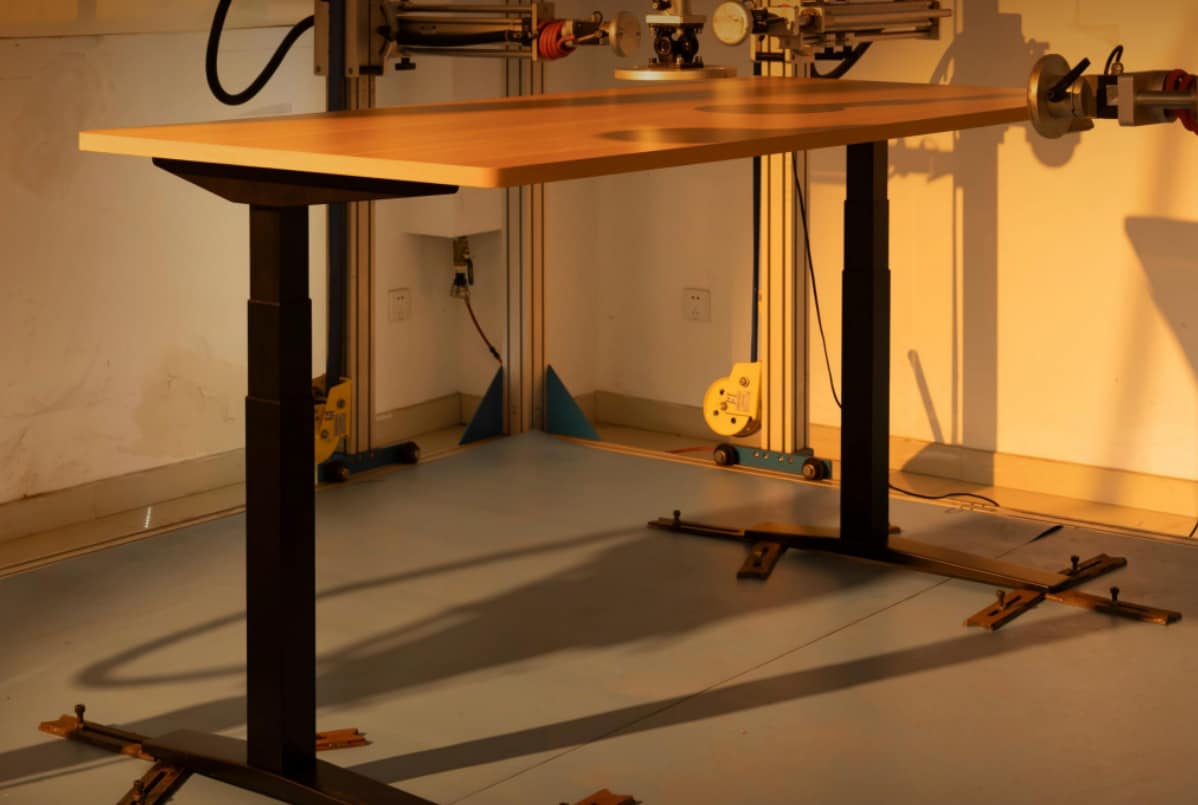
A standing desk might feel perfectly stable when lowered, but what happens when you raise it to standing height? Does your monitor shake when you type? Does the desktop move when you write, lean against its edge or adjust your equipment?
These are important questions because stability directly affects how comfortable and confident people feel using a height-adjustable desk.
Although maximum load capacity and lifting speed often attract attention, structural stability deserves equal consideration. A desk must remain sufficiently rigid while supporting equipment, responding to everyday movement and operating at different heights.
The FlexiSpot E7 Pro Engineering White Paper examines this challenge through structural design analysis and mechanical testing. As the first of six engineering assessment dimensions, stability provides a particularly visible indication of how effectively the desk's components work together.
Why Structural Stability Matters
● Standing height changes the challenge
When an electric standing desk rises, its lifting columns extend and the distance between the desktop and floor increases.
This makes the rigidity of the columns, frame and connecting components especially important.
Even relatively small movements may become noticeable through a monitor or objects positioned on the desktop.
● Stability reflects overall engineering quality
A stable desk depends on more than strong legs.
Its performance also reflects frame construction, component connections, lifting-system coordination and material strength.
The FlexiSpot E7 Pro height-adjustable desk is designed around these interconnected engineering considerations.
The white paper evaluates stability as both an independent performance dimension and an indicator of the wider desk system.
--altImgStart--{"link":"https://s3.springbeetle.eu/prod-eu-s3/commodity/item/Fig%20C-Shape_20261023_5Nl05DfO.png","alt":"Standing Desk with Enhanced Stability (E7 PRO)"}--altImgEnd--
How the E7 Pro's Structural Design Supports Stability
The E7 Pro incorporates several structural features intended to improve rigidity and resistance to movement.
C-shaped legs and reinforced steel construction
The desk uses C-shaped legs combined with a thickened 3.0 mm steel base.
This construction is designed to strengthen the supporting structure and improve stability during everyday use.
The base is particularly important because the desk must resist forces applied above floor level, including pressure from typing, writing and leaning.
High-precision steel lifting columns
The E7 Pro's telescopic lifting columns use high-precision seamless steel tubes with three specified profiles:
- 70 × 70 × 1.5 mm
- 65 × 65 × 1.5 mm
- 60 × 60 × 2.0 mm
These dimensions describe the square tube cross-sections and wall thicknesses.
Square profiles provide relatively consistent bending resistance across different horizontal directions, contributing to structural rigidity.
Increased overlap between column sections
Telescopic lifting columns must extend while maintaining sufficient engagement between their sections.
According to the engineering brief, the E7 Pro features 180 mm overlap between the inner and middle tubes and 203 mm between the middle and outer tubes.
These overlapping sections are intended to help limit unwanted movement as the desk extends.
SPCC carbon steel
The lifting structure uses SPCC low-carbon cold-rolled steel, a material associated with smooth surfaces and dimensional accuracy.
Precise manufacturing matters because the lifting sections must move smoothly while maintaining appropriate alignment and structural support.
| Test ID | Test Name | Test Result |
| 1.2 Core Test A | ||
| 1.2.1 | Structural Rigidity Test | ✓ |
| 1.2.2 | Horizontal Static Load Test | ✓ |
| 1.2.3 | Additional Horizontal Static Load Test | ✓ |
| 1.2.4 | Vertical Static Load | ✓ |
| 1.2.5 | Additional Vertical Static Load Test | ✓ |
| 1.2.6 | Stability Test | ✓ |
| 1.2.7 | Vertical Stability Test | ✓ |
| 1.2.8 | Vertical Impact Test | ✓ |
| With Extra-Large Tabletop | ||
| 1.2.9 | Structural Rigidity Test (2000 mm Long Tabletop) | ✓ |
| 1.2.10 | Horizontal Static Load Test (2000 mm Long Tabletop) | ✓ |
| 1.2.11 | Additional Horizontal Static Load Test (2000 mm Long Tabletop) | ✓ |
| 1.2.12 | Vertical Static Load (2000 mm Long Tabletop) | ✓ |
| 1.2.13 | Additional Vertical Static Load Test (2000 mm Long Tabletop) | ✓ |
| 1.2.14 | Overall Wobble Displacement (2000 mm Long Tabletop) | ✓ |
| 1.2.15 | Stability Test Under Vertical Load (2000 mm Long Tabletop) | ✓ |
| 1.2.16 | Vertical Impact Test (2000 mm Long Tabletop) | ✓ |
List of Stability Test
How Is the E7 Pro Stability Tested?
The engineering assessment examines structural strength and rigidity under controlled conditions.
Testing against a recognised European standard
The testing references EN 527-2:2016+A1:2019, which establishes safety, strength and durability requirements for office work tables.
The British Standards Institution identifies this standard as a framework for evaluating office desk construction and mechanical performance.
Using defined testing procedures allows structural behaviour to be assessed systematically rather than through subjective impressions alone.
Measuring horizontal movement
For tests 1.2.1–1.2.3 and 1.2.6, the desk is placed on a flat surface, adjusted to the target height and loaded according to the test requirements.
The feet are secured to prevent sliding.
Forces are then applied from four opposing directions, identified as Fa, Fb, Fc and Fd.
The corresponding lateral and longitudinal displacements, Da, Db, Dc and Dd, are recorded.
This approach evaluates how the desktop and columns respond to forces resembling those encountered during everyday desk use.
Evaluating resistance to tipping
Tests 1.2.4–1.2.5 and 1.2.7–1.2.8 examine stability under different conditions.
The desk is positioned on a flat surface without locking its feet.
Force is applied near the edge most susceptible to tipping, allowing the assessment to consider how the desk responds when pressure is concentrated towards its perimeter.
This is important because structural rigidity and resistance to tipping are related but distinct characteristics.
Test Result
| Test ID & Test Name | Desk Height | Desktop Load | Applied Force | Procedure | Assessment Criteria | Test Result |
| EN 527-2:2016+A1:2019 1.2.1 Structural Rigidity Test | 950 mm | 20 kg | 200 N | Held for 10±1 s | D1* shall be < 17 mm/m,D2* shall be < 17 mm/m. | Pass D1=4.23 D2=5.04 |
| EN 527-2:2016+A1:2019 1.2.2 Horizontal Static Load Test | 950 mm | 50 kg | 500 N | Apply the specified thrust 10 times | No structural or functional damage to the desk; no permanent deformation or failure of parts;D1 shall be < 25 mm, D2 shall be < 25 mm, D3 shall be < 25 mm, D4 shall be < 25 mm. | Pass Da=12.25 Db=11.37 Dc=8.26 Dd=7.53 |
| EN 527-2:2016+A1:2019 1.2.3 Additional Horizontal Static Load Test | 1280 mm | 50 kg | 500 N | Apply the specified thrust 10 times | No structural or functional damage to the desk; no permanent deformation or failure of parts;D1 shall be < 25 mm, D2 shall be < 25 mm, D3 shall be < 25 mm, D4 shall be < 25 mm. | Pass Da=12.34 Db=12.13 Dc=8.26 Dd=7.81 |
| EN 527-2:2016+A1:2019 1.2.4 Vertical Static Load | 950 mm | / | 1000 N | Repeat 10 times | No structural or functional damage to the desk; no permanent deformation or failure of parts; | Pass |
| EN 527-2:2016+A1:2019 1.2.5 Additional Vertical Static Load Test | 1280 mm | / | 500 N | Repeat 10 times | No structural or functional damage to the desk; no permanent deformation or failure of parts; | Pass |
| 1.2.6Overall Wobble Displacement | 1280 mm | 20 kg | 100 N | Held for 10±1 s | Da shall be < 3.5 mm, Db shall be < 3.5 mm, Dc shall be < 3.5 mm, Dd shall be < 3.5 mm. | Pass Da=2.62 Db=1.91 Dc=2.34 Dd=1.75 |
| EN 527-2:2016+A1:2019 1.2.7 Stability Test Under Vertical Load | 1280 mm | / | 750 N | Held for 10±1 s | No structural or functional damage to the desk; no permanent deformation or failure of parts; | Pass |
| EN 527-2:2016+A1:2019 1.2.8 Vertical Impact Test | 950 mm | / | Standard impactor | Repeat 10 times | No structural or functional damage to the desk; no permanent deformation or failure of parts; | Pass |
| EN 527-2:2016+A1:2019 1.2.9 Structural Rigidity Test (2000 mm Long Tabletop) | 950 mm | 20 kg | 200 N | Held for 10±1 s | D1* shall be < 17 mm/m,D2* shall be < 17 mm/m. | Pass D1=5.26 D2=5.15 |
| EN 527-2:2016+A1:2019 1.2.10 Horizontal Static Load Test (2000 mm Long Tabletop) | 950 mm | 50 kg | 500 N | Apply the specified thrust 10 times | No structural or functional damage to the desk; no permanent deformation or failure of parts; / D1 shall be< 25 mm,D2 shall be < 25 mm, D3 shall be < 25 mm, D4 shall be < 25 mm. | Pass Da=12.59 Db=12.78 Dc=8.65 Dd=8.82 |
| EN 527-2:2016+A1:2019 1.2.11 Additional Horizontal Static Load Test (2000 mm Long Tabletop) | 1280 mm | 50 kg | 500 N | Apply the specified thrust 10 times | No structural or functional damage to the desk; no permanent deformation or failure of parts;D1 shall be < 25 mm, D2 shall be < 25 mm, D3 shall be < 25 mm, D4 shall be < 25 mm. | Pass Da=12.55 Db=12.63 Dc=8.50 Dd=8.62 |
| EN 527-2:2016+A1:2019 1.2.12 Vertical Static Load (2000 mm Long Tabletop) | 950 mm | / | 1000 N | Repeat 10 times | No structural or functional damage to the desk; no permanent deformation or failure of parts; | Pass |
| EN 527-2:2016+A1:2019 1.2.13 Additional Vertical Static Load Test (2000 mm Long Tabletop) | 1280 mm | / | 500 N | Repeat 10 times | No structural or functional damage to the desk; no permanent deformation or failure of parts; | Pass |
| 1.2.14 Overall Wobble Displacement (2000 mm Long Tabletop) | 1280 mm | 20 kg | 100 N | Held for 10±1 s | Da shall be < 3.5 mm, Db shall be < 3.5 mm, Dc shall be < 3.5 mm, Dd shall be < 3.5 mm. | Pass Da=2.88 Db=2.14 Dc=2.73 Dd=2.36 |
| EN 527-2:2016+A1:2019 1.2.15 Stability Test Under Vertical Load (2000 mm Long Tabletop) | 950 mm | / | 750 N | Held for 10±1 s | No structural or functional damage to the desk; no permanent deformation or failure of parts; | Pass |
| EN 527-2:2016+A1:2019 1.2.16 Vertical Impact Test (2000 mm Long Tabletop) | 950 mm | / | Standard impactor | Repeat 10 times | No structural or functional damage to the desk; no permanent deformation or failure of parts; | Pass |
Test Results With Extra-Large Tabletop (2000 mm)
Understanding the Stability Measurements
The report uses displacement measurements to evaluate structural movement.
Lateral and longitudinal displacement
For test 1.2.1, D1 represents cumulative left-right displacement, incorporating Da and Db, divided by desk height.
D2 represents the corresponding cumulative displacement incorporating Dc and Dd, also divided by desk height.
These calculations help relate movement to the desk's overall height rather than considering displacement in isolation.
Why tabletop size matters
The assessment also includes mechanical testing with an extra-large 2,000 mm tabletop.
Larger desktops can introduce different loading conditions and leverage effects, making configuration-specific testing valuable.
The report defines desk height as the distance from the floor to the top of the desktop, using a 25 mm-thick tabletop.
These details matter when interpreting results across different configurations.
What Should Consumers Look for in the Results?
Rigidity under realistic forces
A useful stability assessment should show how much the structure moves under defined forces and working heights.
The smaller the unwanted movement, the less noticeable desk wobble may become during ordinary tasks.
However, comparisons should account for the applied loads, tabletop dimensions and testing conditions.
Structural strength and tipping resistance
Horizontal rigidity alone does not establish overall stability.
The assessment also considers horizontal static loads, vertical static loads and vertical stability, including specific tests for larger tabletops.
Together, these evaluations provide a broader picture of the desk's mechanical behaviour.
The supplied test outline identifies the procedures but does not include the numerical results tables, so specific displacement values or pass results are not reproduced here.
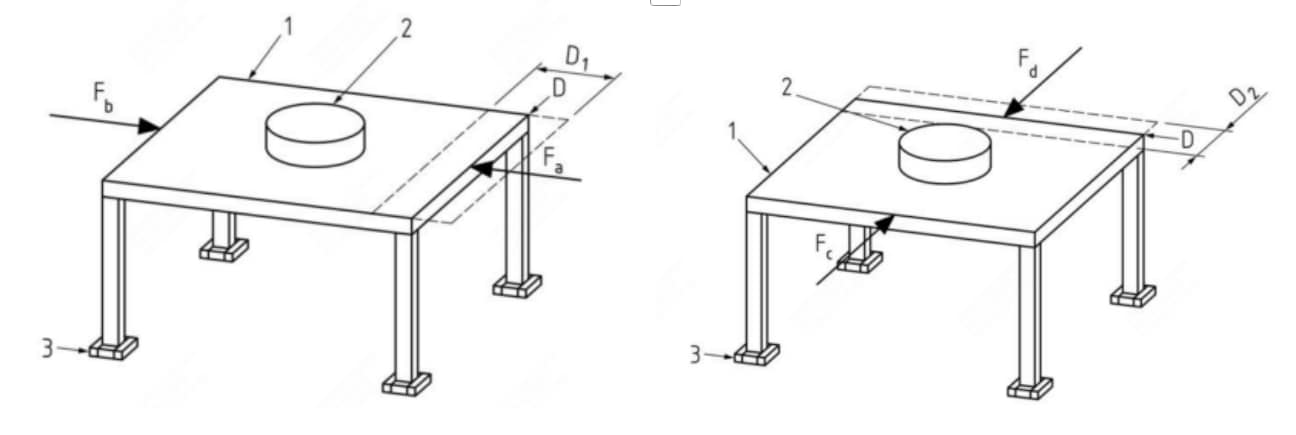
Fig. 7 Structural Rigidity Test
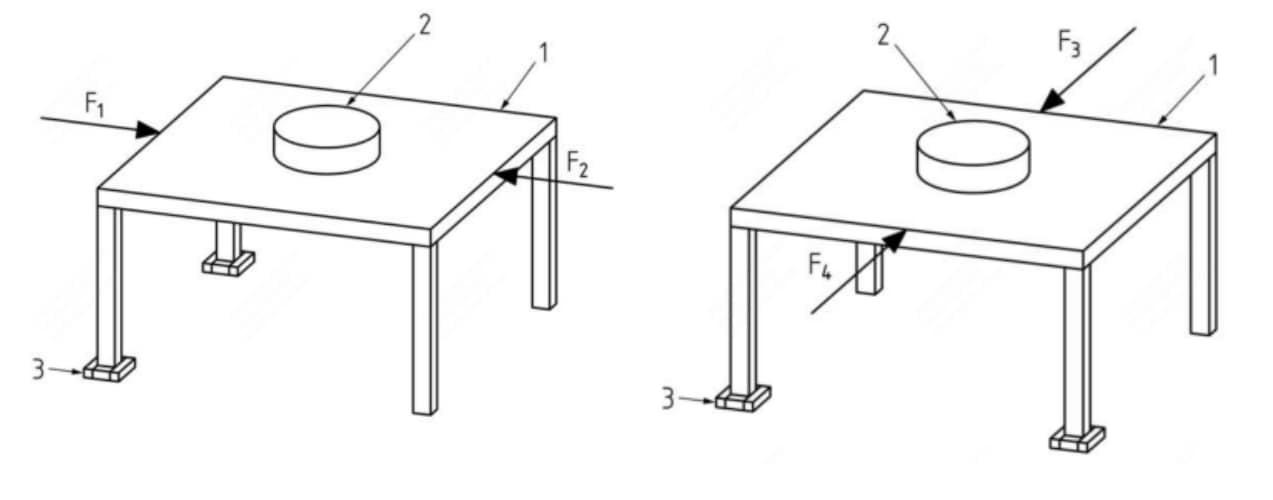
Fig. 8 Horizontal Static Load Test
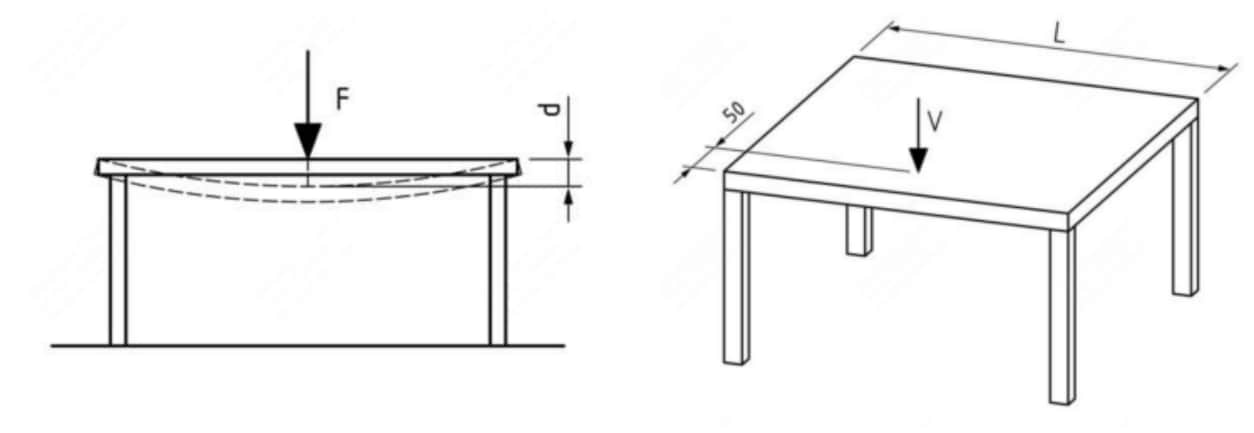
Fig. 9 Vertical Static Load Test Fig. 10 Vertical Stability Test
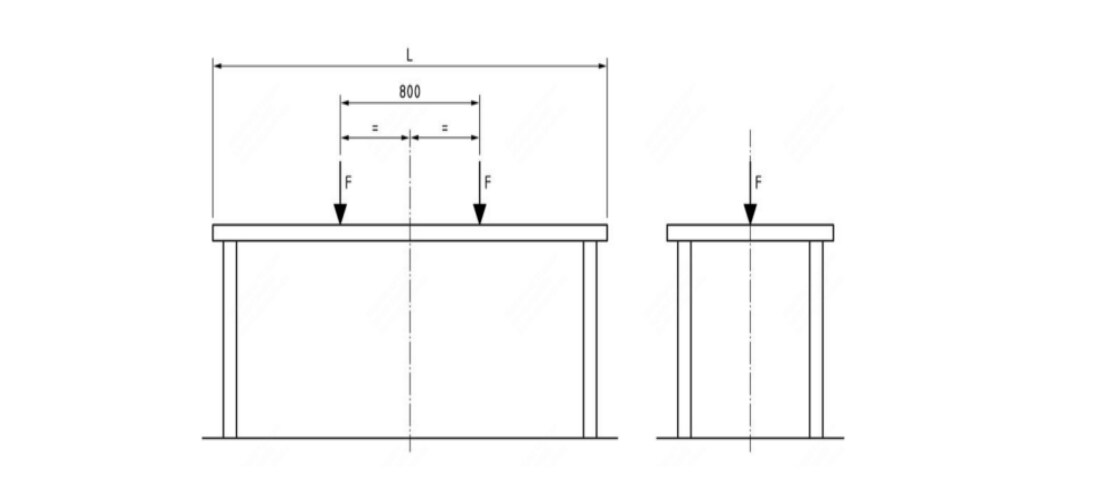
Fig. 11 Vertical Static Load Test for Tabletops over 1600 mm
Final Thoughts
Standing desk stability depends on a combination of materials, structural geometry, column overlap, frame rigidity and resistance to external forces.
The FlexiSpot E7 Pro engineering assessment examines these factors using defined mechanical tests, including horizontal displacement measurements, static loading and tipping resistance.
Its reinforced steel structure, precision lifting columns and overlapping telescopic sections are designed to support stability throughout the height-adjustment range.
For readers interested in the detailed procedures, measurement tables and engineering figures, the complete white paper provides the technical reference.
Read the Full FlexiSpot E7 Pro Stability Test Report, Pages 6–11
This stability assessment is the first step towards understanding the wider engineering performance of the E7 Pro, including lifting capability, safety protection and long-term reliability.


